



What's Happening?
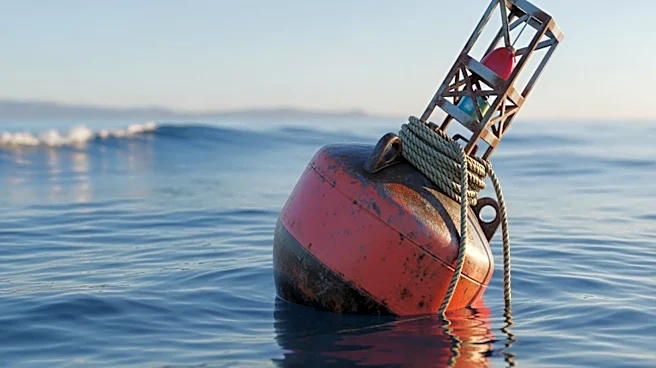
Bahrain's Foreign Minister Abdullatif bin Rashid Al Zayani has urged the United Nations Security Council to vote on a resolution aimed at protecting commercial shipping in the Strait of Hormuz. This comes in response to heightened tensions following a conflict
involving the U.S. and Israel against Iran, which has led to the effective closure of the strait. The resolution, now in its fourth draft, seeks to authorize 'all necessary means' to ensure safe passage through the strait, though it has been revised to remove binding enforcement language to address objections from Russia and China. The draft includes a six-month time limit for the proposed measures. The resolution is under a silence procedure, meaning it will proceed to a vote if no objections are raised by a set deadline.
Why It's Important?
The Strait of Hormuz is a critical chokepoint for global oil shipments, and its closure has significant implications for international energy markets. The ongoing conflict and the potential for military action to secure the strait have already led to a surge in oil prices, affecting economies worldwide. The resolution's passage could stabilize the situation by providing a framework for international cooperation in securing the strait, but opposition from key Security Council members like Russia and China complicates the diplomatic landscape. The outcome of this vote could influence global energy security and geopolitical dynamics in the region.
What's Next?
If the resolution passes, it could lead to coordinated international efforts to reopen the Strait of Hormuz, potentially involving military or diplomatic measures. However, if the resolution is blocked, tensions may escalate, and alternative strategies will need to be considered. The United Kingdom is planning to host talks to explore viable options for ensuring safe navigation through the strait, which could involve further diplomatic negotiations or regional security arrangements.