





What's Happening?
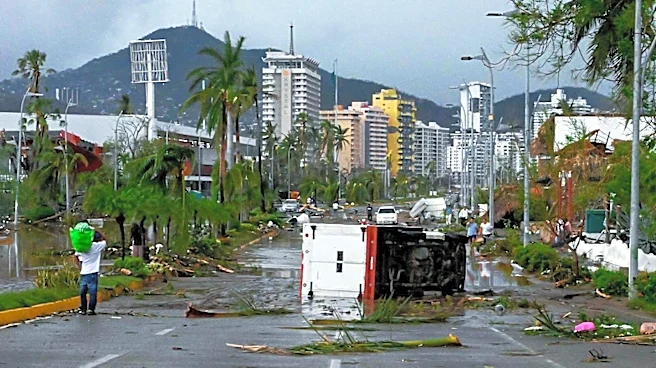
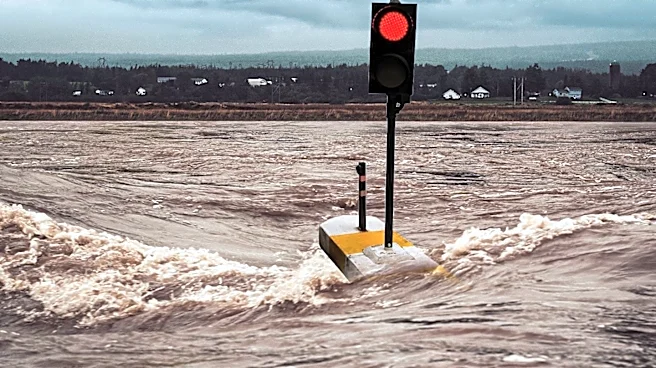
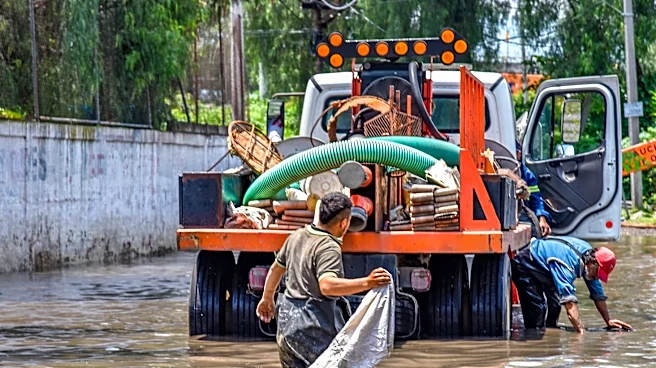
Heavy rains have severely impacted the Seoul metropolitan area and the eastern province of Gangwon, resulting in approximately 540 cases of property damage. The Central Disaster and Safety Countermeasure Headquarters reported that nearly 200 millimeters
of rain fell overnight, leading to flooding in homes and roads. Specific areas such as Paju, Dongducheon, and Pocheon experienced significant rainfall, with alerts for heavy rain and mudslides still in effect. Despite the extensive property damage, no human casualties have been reported. However, 95 people from 44 households were evacuated as a precaution. Access to several national parks and hiking paths has been restricted, and ferry routes off the west coast have been suspended.
Why It's Important?
The heavy rainfall in Seoul highlights the vulnerability of urban areas to extreme weather events, which can lead to significant disruptions in daily life and economic activities. The flooding has caused substantial property damage, affecting residents and potentially leading to costly repairs and insurance claims. The situation underscores the importance of effective disaster preparedness and response strategies to mitigate the impact of such natural events. Additionally, the ongoing climate change discussions emphasize the need for resilient infrastructure to withstand increasingly frequent and severe weather patterns.
What's Next?
Authorities are on high alert for potential landslides, particularly in the central province of Chungcheong and the northeastern province of Gangwon, as more heavy rain is expected. Prime Minister Han Seong-sook has ordered the mobilization of equipment and personnel to address the damage and prevent further incidents. The government is likely to continue monitoring the situation closely and may implement additional safety measures to protect residents and infrastructure. The response to this event could influence future policies on urban planning and disaster management in South Korea.