








What's Happening?
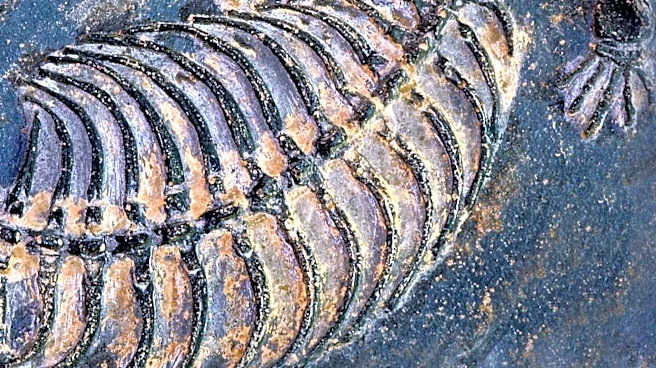
Researchers have identified the first known amphibian, extinct or extant, with a fully marine lifestyle. This discovery, detailed in the journal Nature Ecology & Evolution, involves two nearly complete skeletons of an ancient amphibian named Gerrothorax
maritimus. These fossils were unearthed in China’s Guizhou Province and date back approximately 237 million years to the Triassic Period. Gerrothorax maritimus was an armored, bottom-dwelling creature, measuring about 30 inches (75 cm) long, with a flat, disc-shaped body and a wide mouth, suggesting it was a suction feeder that ambushed prey. Paleobiologist Ryosuke Motani of the University of California, Davis, a lead researcher, highlighted the significance of finding an early amphibian that lived entirely in the sea. Amphibians typically rely on permeable skin for breathing and water intake, a feature that is usually compromised by saltwater, preventing them from inhabiting marine environments. This discovery challenges previous understandings of amphibian adaptation.
Why It's Important?
This discovery significantly alters the scientific understanding of amphibian evolution and adaptation. Previously, it was believed that no amphibian, past or present, could sustain a fully marine existence due to their permeable skin, which causes water loss in saltwater environments. The identification of Gerrothorax maritimus demonstrates that some ancient amphibians developed unique adaptations, such as body armor, that allowed them to overcome these physiological limitations. This armor, initially evolved for protection against freshwater predators, was repurposed to inhibit seawater absorption through the skin. This exaptation allowed the creature to drink saltwater and filter out salt with its gills, a mechanism previously unknown in amphibians. The finding expands the known ecological niches occupied by amphibians in prehistoric times and provides a deeper insight into the diverse evolutionary pathways life has taken.
What's Next?
The discovery of Gerrothorax maritimus opens new avenues for paleontological and evolutionary research. Future studies may focus on identifying additional marine amphibian species or further investigating the specific physiological and anatomical adaptations that allowed Gerrothorax maritimus to thrive in a marine environment. Researchers will likely explore other fossil sites for similar discoveries, potentially uncovering more examples of exaptation in ancient life forms. The chemical signature of Triassic seawater found in the bones of Gerrothorax maritimus provides a reliable method for confirming marine habitation, which could be applied to other ambiguous fossil findings. This research could lead to a re-evaluation of existing amphibian fossil records and a broader understanding of how various species adapted to extreme or unusual environments throughout Earth's history.
Beyond the Headlines
The existence of Gerrothorax maritimus challenges the conventional understanding of biological constraints and highlights the remarkable adaptability of life. The concept of exaptation, where a trait evolved for one purpose is co-opted for another, is vividly illustrated by this amphibian's armor. This discovery underscores that evolutionary paths are often more complex and opportunistic than previously assumed. It also prompts a re-examination of how environmental pressures drive the development of novel biological solutions. The 'charming' and 'comical' appearance of Gerrothorax maritimus, as described by Motani, coupled with its unique physiological peculiarity, adds a fascinating chapter to the story of life on Earth, demonstrating that even seemingly insurmountable biological barriers can be overcome through evolutionary innovation. This finding encourages a more open-minded approach to interpreting fossil evidence and understanding the potential for life to flourish in unexpected ways.