
What's Happening?
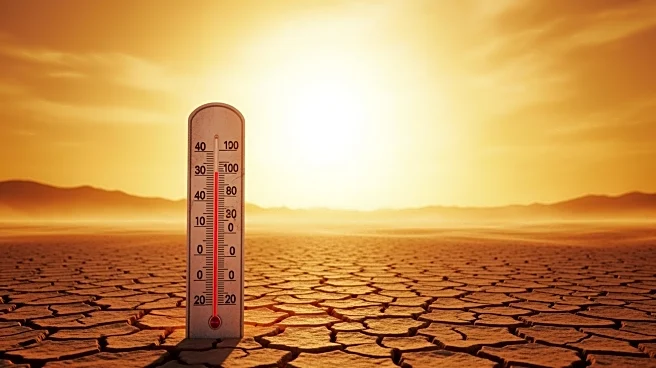
A study by the University of Oxford predicts that nearly half of the global population will experience extreme heat by 2050 if global warming reaches 2.0°C above pre-industrial levels. The study highlights
that regions such as Central Africa, South Asia, and parts of South America will be most affected. The findings emphasize the urgent need for adaptation measures, as many countries' infrastructures are not equipped to handle such temperature increases. The study also provides a dataset for global heating and cooling demand, aiding in sustainability planning.
Why It's Important?
The projected increase in extreme heat poses significant challenges for global infrastructure, public health, and economic stability. Countries with limited resources may struggle to adapt, leading to increased vulnerability and potential humanitarian crises. The study underscores the importance of international cooperation in addressing climate change and implementing effective adaptation strategies. It also highlights the need for sustainable development and decarbonization efforts to mitigate the impacts of rising temperatures on global populations.