
What's Happening?
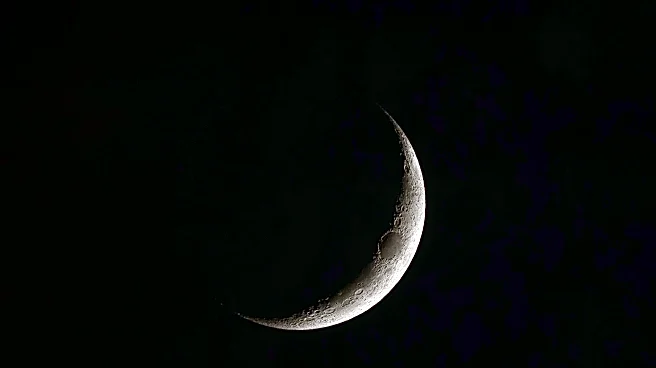
On April 19, 2026, a celestial event will occur as the waxing crescent moon aligns with the Pleiades star cluster in the western sky. This event, known as an occultation, will be visible during the daytime
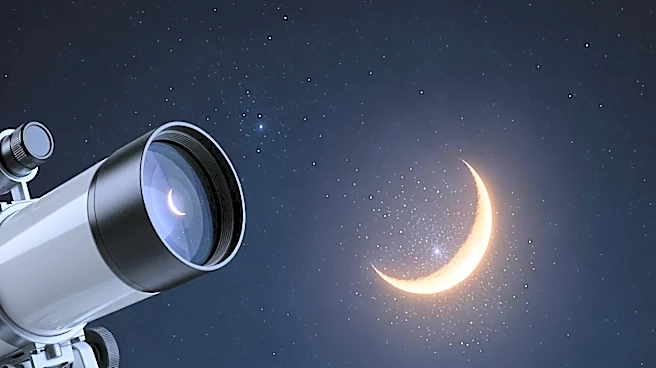
for viewers in the U.S. as the moon passes over the Pleiades at 12:52 p.m. EDT. The Virtual Telescope Project will provide a livestream of this event starting at 2 p.m. EDT, offering real-time telescopic views from Italy, where the event will be visible after sunset. The phenomenon of earthshine, where sunlight reflects off Earth to illuminate the darkened portion of the moon, will also be visible, adding to the spectacle.
Why It's Important?
This celestial event is significant for both amateur and professional astronomers as it provides a unique opportunity to observe the interaction between the moon and the Pleiades, a prominent star cluster. The event highlights the beauty and complexity of astronomical phenomena and offers educational opportunities for those interested in astronomy. The Virtual Telescope Project's livestream makes this event accessible to a global audience, promoting interest in space observation and science. Such events can inspire future generations to pursue careers in astronomy and related fields, contributing to the advancement of scientific knowledge.
What's Next?
Following the livestream, viewers may engage with the Virtual Telescope Project and other astronomy communities to share observations and photographs of the event. This engagement can foster a greater appreciation for astronomy and encourage participation in future skywatching events. Additionally, the success of this livestream may lead to more frequent broadcasts of astronomical events, further increasing public interest and involvement in space science.
Beyond the Headlines
The occultation of the moon and the Pleiades offers a moment to reflect on the interconnectedness of celestial bodies and the vastness of the universe. It underscores the importance of preserving dark skies for astronomical observation, as light pollution can hinder the visibility of such events. This event also highlights the role of technology in enhancing our understanding of space, as livestreams and telescopic advancements allow for detailed observation and analysis of celestial phenomena.