





What's Happening?
Recent research has uncovered evidence that up to 1% of human DNA may originate from a mysterious ancestral lineage, often referred to as a 'ghost' population. This discovery challenges the traditional 'Out of Africa' theory, which posited that Homo sapiens
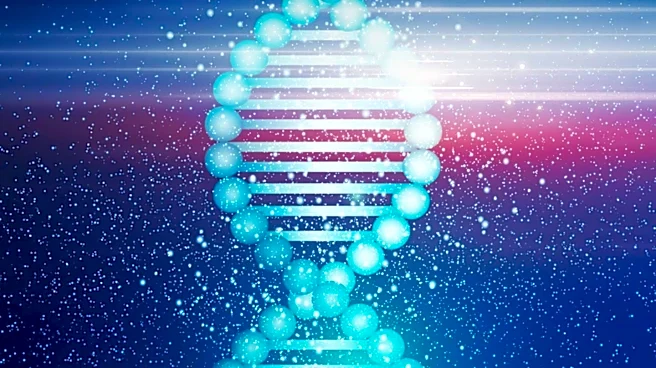
emerged in Africa and replaced archaic humans without interbreeding. The study utilized a method called TRACE to identify genetic sequences in modern humans that do not match known archaic genomes like Neanderthals or Denisovans. These sequences suggest interbreeding with an unknown population, contributing to the genetic makeup of both African and non-African populations. The research highlights the complexity of human ancestry and the potential existence of other archaic human populations that have yet to be identified through fossil records.
Why It's Important?
This discovery has significant implications for our understanding of human evolution and ancestry. It suggests that human history is more complex than previously thought, involving interactions with multiple archaic populations. This could reshape theories about human migration and adaptation, as well as influence the study of genetic diversity and disease susceptibility. The presence of 'ghost' DNA in modern humans indicates that our genetic heritage is a mosaic of contributions from various ancestral groups, which may have played a role in shaping modern human traits and behaviors. This research also underscores the limitations of current fossil records and the potential for genetic studies to uncover hidden aspects of human history.
What's Next?
Future research will likely focus on identifying the specific characteristics and origins of this 'ghost' population. Scientists may attempt to find fossil evidence or develop more advanced genetic models to better understand the contributions of this lineage to modern humans. Additionally, there may be efforts to explore the implications of this genetic diversity for health and disease, as well as its impact on our understanding of human evolution. The study of ancient DNA will continue to be a critical tool in uncovering the complexities of human ancestry and evolution.