






What's Happening?
Duluth, Minnesota, has experienced a 4.5% reduction in its overall tree canopy cover between 2013 and 2020, according to data from the Minnesota Department of Natural Resources (DNR). This decline is largely attributed to the spread of the invasive emerald
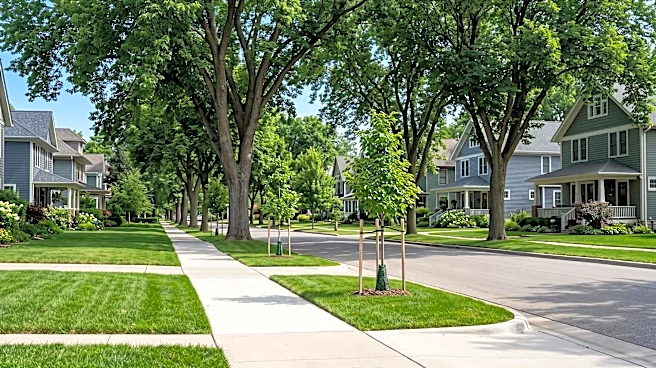
ash borer beetle, which has affected most Minnesota cities. Despite the decrease in canopy cover, Duluth's street tree population saw a 2% increase from 2010 to 2020. This trend of declining canopy but increasing street tree numbers is also observed in many metro-area communities. Clark Christenson, Duluth’s city forester, explained that while mature ash trees with large crowns have been removed due to the beetle, new, more diverse species are being planted. However, these young trees will take time to grow and replace the lost canopy. The DNR's Community Tree Canopy Viewer, a new tool, combines aerial data with on-the-ground tree counts to provide insights into urban forestry trends across over 300 communities in the state.
Why It's Important?
The dual trend of decreasing tree canopy and increasing street tree populations in Duluth highlights a critical challenge in urban forestry management across the U.S. The loss of mature canopy cover can have significant environmental impacts, including reduced stormwater absorption, increased urban heat island effects, and diminished air quality. These effects can directly impact public health and infrastructure. The proactive effort to increase street tree populations, particularly with a more diverse array of species, is crucial for building long-term urban forest resilience against pests, diseases, and climate change impacts like drought and heavier rainfall. This strategy aims to prevent future widespread tree loss from single threats, ensuring a more stable and beneficial urban ecosystem. The data provided by the DNR tool is vital for urban planners and foresters to make informed decisions about species selection and planting locations, ultimately affecting the livability and environmental sustainability of cities.
What's Next?
Duluth city foresters and conservationists will continue to focus on planting diverse tree species that are resilient to climate change, drought, and increasing temperatures. The goal is to replace the lost canopy over time and create a more robust urban forest. The DNR's Community Tree Canopy Viewer will serve as a valuable resource for identifying areas of significant canopy loss and guiding future planting initiatives. This data will also help communities avoid over-reliance on single tree species, such as maples, which currently constitute a quarter of Duluth's boulevard trees. The ongoing effort will involve educating the public and encouraging the planting of a wider variety of trees to foster a more resilient urban ecosystem. The long-term success will depend on sustained planting efforts and effective management strategies to nurture the newly planted trees to maturity.
Beyond the Headlines
The situation in Duluth reflects a broader national challenge in urban areas grappling with the effects of invasive species and climate change on their tree populations. Beyond the immediate environmental benefits, a healthy urban tree canopy contributes significantly to community well-being, property values, and mental health. The shift towards planting more diverse and climate-resilient species represents an evolving understanding of ecological urban planning, moving away from monoculture planting that leaves cities vulnerable. This proactive approach also has economic implications, as healthy urban forests can reduce energy consumption for cooling and mitigate infrastructure damage from stormwater. The 'happy accident' of increased white cedar populations, a hardy and resilient species, underscores the importance of natural adaptation and the potential for unexpected positive outcomes in ecological shifts, guiding future conservation efforts towards naturally robust species.