







What's Happening?
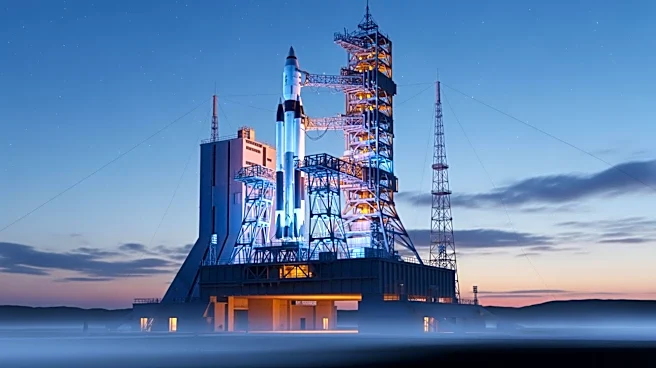
NASA has completed significant upgrades to Launch Complex 39B at the Kennedy Space Center, enabling the successful launch of the Artemis II mission. This mission marks the first time in over fifty years that humans are being sent toward the moon. The
upgrades, costing billions of dollars, involved extensive engineering work to accommodate the Space Launch System (SLS), a 32-story rocket. The Artemis II mission, launched on April 1, 2026, includes a crew of four astronauts and is part of NASA's broader Artemis program aimed at returning humans to the moon.
Why It's Important?
The successful upgrades to Launch Pad 39B are crucial for NASA's Artemis program, which aims to establish a sustainable human presence on the moon. This mission is a significant step toward future lunar exploration and potential colonization. The advancements in launch infrastructure demonstrate NASA's commitment to maintaining U.S. leadership in space exploration. Additionally, the Artemis program's progress could have geopolitical implications, as other nations, such as China, are also pursuing lunar exploration. The program's success may influence international space policy and collaboration.
What's Next?
Following the Artemis II mission, NASA plans to continue its lunar exploration efforts with Artemis IV, targeting the first crewed landing on the moon's south pole by 2028. This mission will involve further technological advancements and international collaboration. The Artemis program's progress will be closely monitored by global space agencies and could lead to new partnerships and competitive dynamics in space exploration. The program's outcomes may also impact future funding and policy decisions related to space exploration and technology development.