







What's Happening?
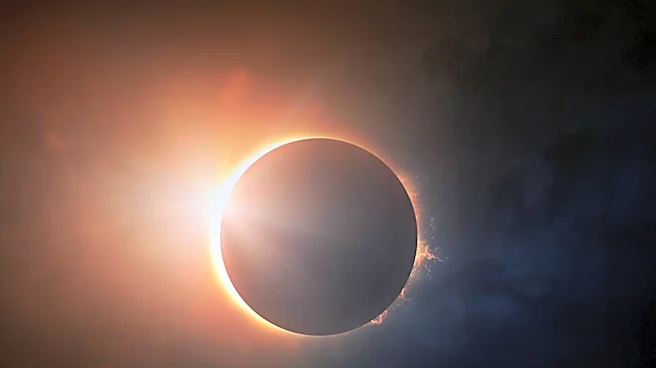
A total solar eclipse is set to occur on August 12, 2026, visible across parts of Greenland, Iceland, and Spain. This event marks Europe's first total solar eclipse since 1999, generating significant excitement among astronomers and the public. The path
of totality will offer complete darkness in select areas, attracting millions of observers, including scientists and photographers. The eclipse will provide a rare opportunity to study the Sun's corona and other solar phenomena. Preparations are underway as travelers finalize plans to witness this astronomical event, with high demand for prime viewing locations.
Why It's Important?
Total solar eclipses are rare events that offer unique opportunities for scientific study and public engagement. For Europe, this eclipse is particularly significant as it provides a chance to observe a total eclipse without traveling to another continent. The event is expected to boost tourism and local economies in the regions along the path of totality. Additionally, it serves as an educational moment, raising awareness about astronomy and the importance of safe viewing practices. The eclipse also highlights the need for international collaboration in scientific research and public outreach.
What's Next?
As the eclipse date approaches, preparations continue to ensure safe and successful viewing experiences. Authorities in Greenland, Iceland, and Spain are coordinating logistics to accommodate the influx of visitors. Scientists are preparing to conduct studies on the solar corona and atmospheric changes during the eclipse. Public safety campaigns are emphasizing the importance of using certified eclipse glasses to prevent eye damage. Weather conditions will play a crucial role in determining the best viewing locations, with travelers advised to remain flexible in their plans.