



What's Happening?
Strong storms swept through central North Carolina on Saturday evening, causing significant damage, power outages, and downed trees across Wake, Durham, and Fayetteville counties. In Wendell Falls, Wake County, residents reported high winds and heavy
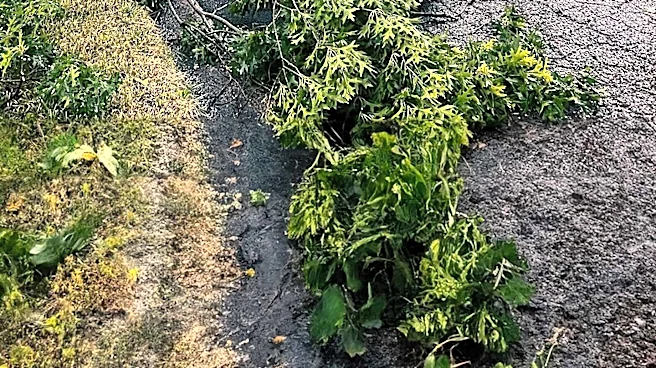
rain, leading to widespread impacts including dozens of downed trees, property damage, and electricity loss for thousands of people. Wind gusts in the Wendell Falls area reached 55 to 60 mph. One resident described their patio being destroyed and a child's playhouse exploding. In Moore County, multiple trees fell on roadways, with community members assisting first responders in clearing debris. A tree also fell onto a vehicle on U.S. Highway 15-501, resulting in the driver being hospitalized with non-life-threatening injuries. Power outages affected businesses, traffic signals, and homes for several hours.
Why It's Important?
The severe weather event in central North Carolina highlights the vulnerability of communities to sudden and intense meteorological phenomena. The widespread power outages disrupted essential services, businesses, and daily life for thousands, underscoring the critical importance of resilient energy infrastructure. The damage to property and infrastructure, including downed trees and a partially unroofed gas station, represents significant financial costs for individuals, businesses, and local governments for repairs and recovery. The involvement of community members in clearing debris alongside first responders demonstrates the immediate need for collective action during emergencies and the strength of local solidarity. Furthermore, the incident serves as a reminder of the dangers posed by severe weather to motorists and pedestrians, emphasizing the importance of timely warnings and public safety measures.
What's Next?
Emergency services and utility companies in Wake, Durham, and Fayetteville counties will continue their efforts to restore power and clear debris. Residents are advised to remain cautious of downed power lines and damaged structures. While conditions are expected to be slightly cooler on Sunday with another chance of storms, the immediate focus will be on recovery and assessment of the full extent of the damage. Local authorities will likely be coordinating with state agencies for assistance in cleanup and potential aid for affected residents and businesses. The incident may also prompt discussions on improving storm preparedness and response protocols, as well as strengthening infrastructure to withstand future severe weather events. The community's resilience and cooperation will be crucial in the coming days as they work to return to normalcy.
Beyond the Headlines
The impact of these storms extends beyond immediate physical damage, touching upon broader issues of urban development and environmental management. The vulnerability of trees, particularly in residential areas, to high winds raises questions about urban forestry practices and the selection of tree species in populated zones. The disruption to businesses and daily routines due to power outages also underscores the economic fragility of communities reliant on consistent electricity, prompting consideration of alternative power sources and grid modernization. Moreover, the community's response, with residents actively participating in cleanup efforts, highlights the vital role of social capital and local networks in disaster recovery. This event serves as a case study for how communities can both suffer from and respond to the increasing frequency and intensity of severe weather, pushing for more integrated approaches to disaster preparedness and climate resilience.