
What's Happening?
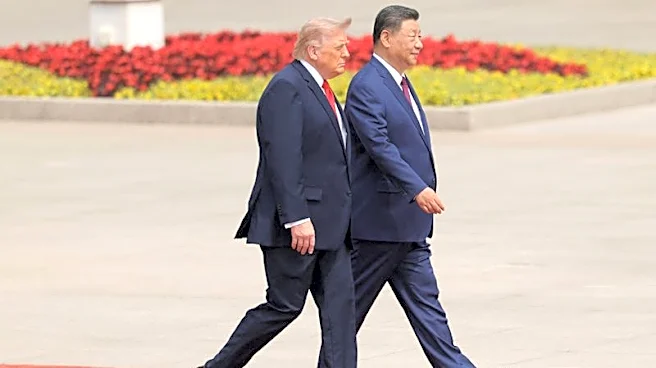
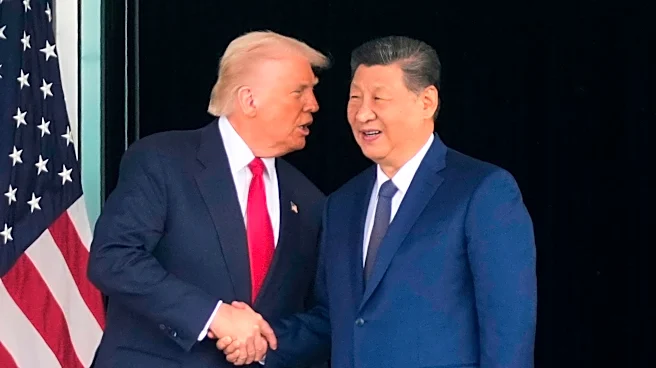
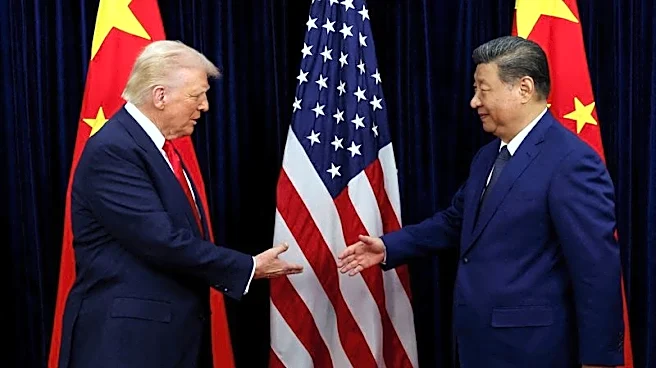
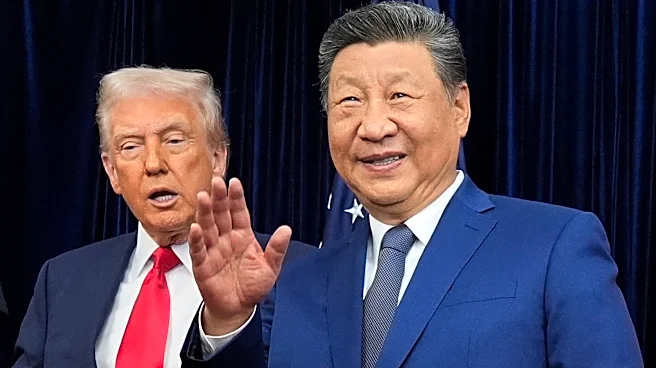
President Trump and Chinese President Xi Jinping have engaged in discussions regarding the reopening of the Strait of Hormuz, a critical waterway for global oil and gas supply. The strait, which is only
33 kilometers wide at its narrowest point, is a vital passage for approximately one-fifth of the world's oil and LNG shipments. The talks between the two leaders highlight the intersection of energy security, geopolitical rivalry, and regional conflicts. Despite the discussions, no formal agreement or binding protocol was established. The situation remains complex, with Iran asserting operational sovereignty over vessel movement, independent of U.S. naval coordination. This has led to a dual framework for navigation, complicating the geopolitical landscape.
Why It's Important?
The Strait of Hormuz is crucial for global energy markets, and any disruption can have significant economic repercussions. The ongoing tensions and naval restrictions have already contributed to elevated oil prices, with Brent crude trading near $105 per barrel. The International Monetary Fund (IMF) has warned that prolonged disruptions could negatively impact global economic growth. The situation also underscores the strategic importance of the strait for major energy importers like China, Japan, South Korea, and India, who rely heavily on Middle Eastern energy supplies. The U.S. is less dependent on imports but remains exposed through global price benchmarks and allied energy security commitments.
What's Next?
The future of the Strait of Hormuz remains uncertain, with several potential scenarios. A negotiated reopening could lead to a reduction in oil prices, while a fragmented access system might maintain current price levels. A prolonged stalemate could further escalate tensions and increase the risk of maritime incidents. Iran's demands for the removal of U.S. naval restrictions and sanctions relief remain significant obstacles to resolution. Meanwhile, China continues to balance its commercial interests with diplomatic engagements, maintaining relationships with both Washington and Tehran.
Beyond the Headlines
The situation at the Strait of Hormuz reflects broader geopolitical dynamics, including the strategic balancing acts of major powers like the U.S., China, and Iran. The dual navigation frameworks highlight the complexities of international maritime law and the challenges of maintaining open trade routes amid geopolitical tensions. The ongoing discussions and lack of resolution also point to the limitations of diplomatic engagements without binding commitments. The energy market's response to these developments underscores the interconnectedness of global economies and the potential for geopolitical events to influence market stability.