



What's Happening?
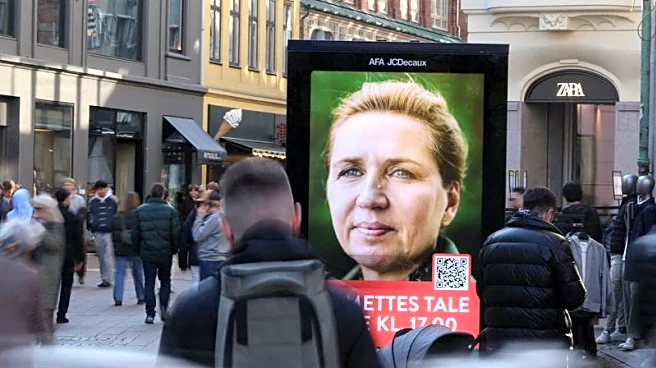
Denmark is holding general elections with Prime Minister Mette Frederiksen as a leading candidate. The election is marked by Frederiksen's previous confrontation with U.S. President Trump over his interest in purchasing Greenland, a Danish autonomous
territory. Although the Greenland issue has not been central to the campaign, it has influenced perceptions of Frederiksen's leadership. The election is closely contested, with the centre-left bloc slightly ahead in polls but no clear majority expected. The outcome may depend on the four overseas seats from Greenland and the Faroe Islands, and the centrist Moderate party led by Lars Lokke Rasmussen could play a decisive role.
Why It's Important?
The election's outcome could impact Denmark's domestic and foreign policies, particularly regarding its relationship with Greenland and the United States. Frederiksen's handling of the Greenland issue has bolstered her image as a strong leader, which may influence voter confidence. The election also highlights broader themes such as immigration, environmental policies, and economic concerns, reflecting Denmark's internal priorities. The result could affect Denmark's political landscape, especially if the far-right gains influence, potentially altering immigration policies and international relations.
What's Next?
As polling stations close, exit polls will provide initial insights, with final results expected within hours. The election's outcome will determine the composition of Denmark's government and its approach to key issues. If Frederiksen retains leadership, her policies on immigration and welfare may continue, while a shift in power could lead to changes in these areas. The role of Greenland and its push for independence may also gain more attention, depending on the election results and subsequent government formation.