





What's Happening?
Researchers at Adelaide University have developed a novel method utilizing messenger RNA (mRNA) technology and targeted lipid nanoparticles to reprogram tumor-associated macrophages (TAMs), a type of immune cell that typically helps tumors evade the body's
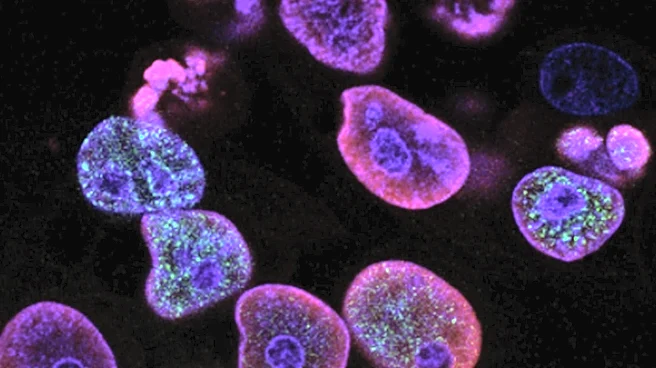
defenses. This approach, detailed in Science Advances, aims to alter the tumor microenvironment rather than destroy immune cells. The nanoparticles are coated with an antibody that binds to TREM2, a protein highly expressed on TAMs, ensuring precise delivery. Once inside the macrophages, the particles release an mRNA molecule that instructs the cells to produce the chemokine CXCL9, and a compound called Resiquimod. Resiquimod prompts the macrophages to switch from an immune-suppressing state, while CXCL9 acts as a chemical beacon to attract cancer-fighting CD8+ T cells into the tumor. Preclinical animal models showed that this treatment reduced immune-suppressing macrophages by over 60% and increased CXCL9 levels fourfold, leading to greater infiltration and activity of T cells and a moderate reduction in tumor growth.
Why It's Important?
This research represents a significant advancement in cancer immunotherapy, particularly for solid tumors that often resist conventional treatments by creating an immunosuppressive environment. By reprogramming TAMs, which are abundant in many tumors and actively suppress anti-tumor immune responses, this technology could make tumors more vulnerable to the body's natural defenses. The use of mRNA and nanoparticle technology, similar to that employed in COVID-19 vaccines, highlights the versatility and potential of these platforms beyond infectious diseases. If successfully translated to human trials, this method could offer a new therapeutic strategy for patients with solid tumors, potentially improving response rates to existing immunotherapies and providing a foundation for more targeted and effective cancer treatments. The ability to specifically target and alter the tumor microenvironment could overcome a major hurdle in cancer treatment, offering hope for patients who currently have limited options.
What's Next?
The researchers emphasize that significant work remains before this approach can be considered for human patients. The next steps will likely involve further preclinical studies to optimize the nanoparticle formulation and delivery, assess long-term efficacy and safety, and explore its potential in various solid tumor types. While combining the nanoparticle system with immune checkpoint inhibitors showed increased cancer-fighting T cells and stimulated central memory T cells in mouse models, it did not yield additional tumor-growth inhibition in the evaluated model, suggesting further research is needed to understand optimal combination strategies. Future research will also focus on scaling up production and conducting rigorous testing to meet regulatory requirements for clinical trials. The ultimate goal is to translate these promising preclinical results into effective and safe treatments for cancer patients, potentially leading to human clinical trials in the coming years.
Beyond the Headlines
This development underscores a broader paradigm shift in cancer treatment, moving beyond directly attacking cancer cells to manipulating the tumor's surrounding environment and the body's immune response. The repurposing of mRNA and nanoparticle technology, initially popularized by COVID-19 vaccines, demonstrates the rapid innovation and adaptability within biomedical research. This approach also highlights the growing understanding of the complex interplay between tumors and the immune system, particularly the role of immune cells like macrophages in either promoting or inhibiting cancer progression. Ethically, this technology opens doors for more personalized and less toxic cancer therapies, potentially reducing the severe side effects associated with traditional chemotherapy and radiation. The long-term implications could include a new class of immunotherapies that are highly specific and effective, transforming the landscape of cancer care and offering new hope for patients with difficult-to-treat solid tumors.