






What's Happening?
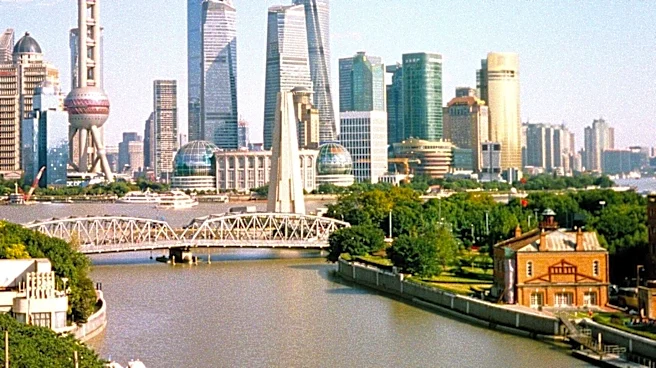
Shanghai, China, currently operating on China Standard Time (CST), which is 15 hours ahead of Pacific Daylight Time (PDT), showcases a unique blend of modernity and tradition. The city is characterized by its futuristic skyline, featuring glass towers,
luxury shopping, and vibrant neon lights, indicative of a fast-paced and ambitious urban environment. However, just around a corner, visitors can discover a contrasting personality: narrow streets with old houses, laundry hanging between buildings, and traditional breakfast shops. This coexistence of the ultra-modern and the deeply traditional is a defining feature of Shanghai, where skyscrapers in Lujiazui can be minutes away from historic architecture and quiet, human-scale street life. The city does not choose between its past and future but rather integrates both, creating a dynamic and fascinating urban experience.
Why It's Important?
Shanghai's ability to seamlessly integrate its historical roots with rapid modernization offers a compelling case study for urban development globally. For U.S. businesses and investors, understanding this dual identity is crucial for market entry and cultural engagement. Companies looking to establish a presence in Shanghai must navigate both the cutting-edge commercial landscape and the deeply ingrained traditional values of its populace. This dynamic also influences tourism, attracting visitors interested in both contemporary experiences and cultural heritage. The city's approach to development, which preserves historical elements amidst futuristic growth, could provide insights for urban planners in the U.S. facing similar challenges of balancing progress with preservation. Furthermore, Shanghai's economic vitality, driven by its modern infrastructure and global connectivity, makes it a significant player in international trade and finance, impacting global supply chains and investment flows that directly affect U.S. economic stakeholders.
What's Next?
Shanghai is expected to continue its trajectory of integrated development, further refining how its modern and traditional aspects coexist. Future urban planning initiatives will likely focus on enhancing connectivity between these two 'personalities,' potentially through cultural preservation projects in historic districts alongside continued investment in high-tech infrastructure. This could involve more pedestrian-friendly zones that bridge modern commercial areas with older neighborhoods, or the development of cultural tourism packages that highlight both facets of the city. Stakeholders, including international businesses and cultural organizations, will likely seek to leverage this unique characteristic to attract talent, investment, and tourism. The city's ongoing efforts to balance rapid growth with cultural heritage preservation will serve as a model for other global cities grappling with similar challenges, influencing future urban development strategies and cross-cultural exchanges.
Beyond the Headlines
The dual personality of Shanghai extends beyond mere aesthetics, reflecting a deeper philosophical approach to progress and identity. It suggests a cultural resilience that embraces change without abandoning its roots, offering a counter-narrative to the often-perceived dichotomy between tradition and modernity. This integration fosters a unique social fabric where historical narratives inform contemporary life, and futuristic aspirations are grounded in a rich past. Ethically, this approach raises questions about sustainable development and the preservation of cultural memory in an era of rapid globalization. For U.S. observers, it highlights the potential for cities to evolve dynamically while maintaining a distinct character, challenging the notion that modernization must inevitably lead to the erasure of heritage. This cultural synthesis could also influence artistic movements, architectural trends, and even consumer preferences, creating a distinct 'Shanghai style' that blends global influences with local traditions.