
What's Happening?
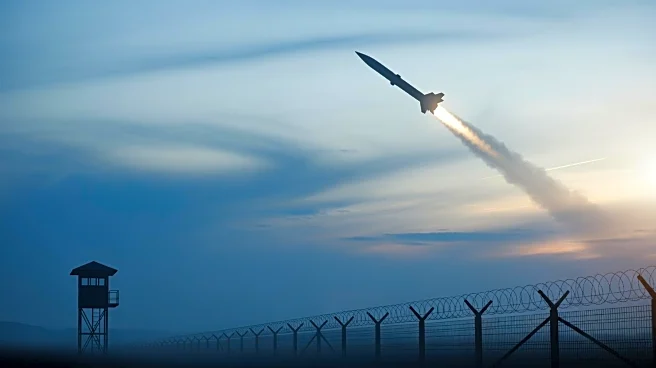
The United States has accused Russia of escalating the ongoing conflict in Ukraine by launching a nuclear-capable Oreshnik ballistic missile near Ukraine's border with Poland, a NATO ally. This development
was highlighted by U.S. Deputy Ambassador to the United Nations, Tammy Bruce, during an emergency Security Council meeting. The missile launch is part of a broader Russian offensive that included a large-scale bombardment involving drones and missiles, which Ukraine claims was a warning to its NATO allies. The attack coincides with heightened tensions between Moscow and Washington, following the U.S. seizure of a Russian oil tanker and the introduction of new sanctions against Russia. Despite these tensions, President Trump has expressed a commitment to advancing peace negotiations.
Why It's Important?
The missile launch near Poland's border represents a significant escalation in the conflict, raising concerns about the potential for broader regional instability. The use of a nuclear-capable missile underscores the severity of the situation and the risks of further military engagement involving NATO countries. The U.S. response, including the imposition of sanctions, aims to pressure Russia economically while supporting Ukraine's defense efforts. This situation highlights the delicate balance of power in Eastern Europe and the challenges of achieving a diplomatic resolution. The conflict's continuation affects global energy markets and international relations, with potential repercussions for U.S. foreign policy and security commitments.
What's Next?
The international community, particularly NATO allies, will likely continue to monitor the situation closely, with potential for increased military readiness in the region. Diplomatic efforts may intensify to de-escalate tensions, though Russia's stance suggests limited willingness to compromise. The U.S. and its allies may consider additional sanctions or military support for Ukraine. The Security Council's role in mediating the conflict could become more prominent, as calls for a peaceful resolution grow. The outcome of these developments will significantly impact the geopolitical landscape in Europe and the broader international community.