





What's Happening?
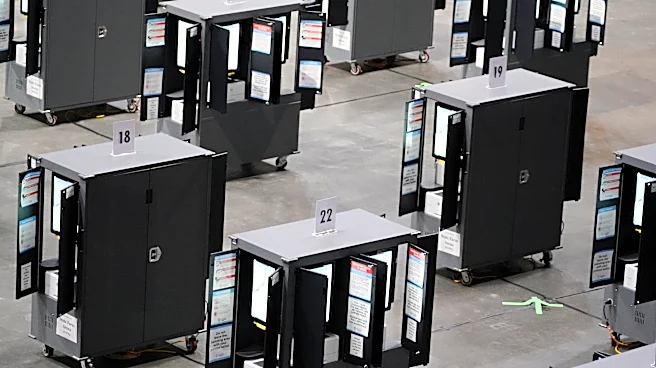
Georgia's voting equipment, manufactured by Dominion Voting Systems (now Liberty Vote), has a known software flaw that could allow voters to be matched to their ballots after they have been cast. This vulnerability, identified in 2022, is drawing increased
attention, particularly with the rapid advancements in artificial intelligence, which security researchers warn can make exploiting such flaws easier. While the flaw does not alter votes or election results, it raises concerns about ballot secrecy, a fundamental right under the state constitution. Other states using similar equipment have applied software updates to fix the issue or restrict public access to records that could exploit it. However, Georgia, a presidential battleground state, is the only place where this system is used statewide, and its open records law provides access to key documents, creating what experts describe as a 'perfect storm.' Efforts to implement a software update before the November midterms have been rejected by the State Election Board due to certification issues, implementation timelines, and lack of legislative funding. The Secretary of State's office has issued guidance to county election officials to refer open records requests for certain records to their office, where problematic information will be redacted.
Why It's Important?
The potential for voters to be linked to their ballots in Georgia has significant implications for election integrity and voter confidence. Ballot secrecy is a cornerstone of democratic elections, designed to prevent coercion, vote buying, or undue influence from family members, political organizations, employers, or government officials. If voters believe their choices are not truly secret, it could deter participation or lead to self-censorship, undermining the democratic process. The vulnerability also provides valuable information for political campaigns, potentially enabling them to target voters based on their past choices. The State Election Board's decision not to implement the software update before the midterms means that this vulnerability will persist during a crucial election cycle, potentially leading to legal challenges and further eroding public trust in election outcomes. The situation highlights a broader challenge in election security, where technological vulnerabilities, combined with legal and logistical hurdles, can create significant risks for democratic practices.
What's Next?
With the State Election Board rejecting the proposal to apply the software update before the November midterms, the vulnerability regarding ballot secrecy will remain in Georgia's voting system for the upcoming elections. The Secretary of State's office plans to work with a vendor to scramble the original order of ballot images and cast-vote records before they are made public, a measure intended to prevent reconstruction of the order and matching of ballots to voters. However, election security advocates, such as Marilyn Marks of the Coalition for Good Governance, argue that withholding documents is not a sufficient solution and that fundamental changes are needed to ensure ballots cannot be traced to voters in the first place. Marks suggests an interim solution of collecting ballots in locked boxes at precincts and then shuffling and scanning them at a central tabulating center. The ongoing debate and the unaddressed flaw are likely to keep election security and ballot secrecy at the forefront of discussions in Georgia, potentially leading to further legislative action or legal challenges in the future.
Beyond the Headlines
The issue of ballot secrecy in Georgia extends beyond the immediate technical flaw, touching upon deeper ethical and legal dimensions of democratic governance. The state constitution explicitly guarantees a secret ballot, and the current vulnerability raises questions about the state's adherence to this fundamental right. The reliance on AI tools to exploit such vulnerabilities underscores the evolving landscape of election security threats, where sophisticated technology can amplify existing weaknesses. This situation also highlights the tension between election transparency and voter privacy; while open records laws are crucial for accountability, they can inadvertently expose sensitive voter information if not carefully managed. The debate over whether to restrict public access to records or fix the underlying technical flaw reflects differing philosophies on how best to safeguard election integrity. Ultimately, the long-term implications could include a re-evaluation of voting machine certifications, increased scrutiny of election software updates, and potentially a shift towards voting methods that inherently offer greater ballot anonymity, such as hand-marked paper ballots, to restore full confidence in the secrecy of the vote.