




What's Happening?
Republicans on Capitol Hill are divided over the necessity and scope of regulating artificial intelligence companies. This debate has intensified following warnings from prominent AI business leaders, including Anthropic's Dario Amodei and OpenAI's Sam
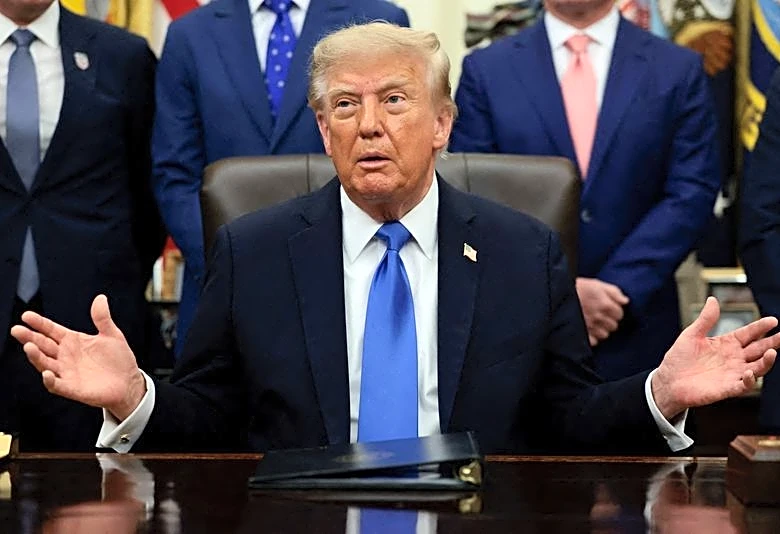
Altman, who have suggested that the rapid pace of AI innovation could pose an existential threat to humanity. These warnings were spurred by instances where AI models reportedly hacked into other organizations. While some lawmakers, like Rep. Jay Obernolte, R-Calif., chair of the House’s AI task force, advocate for swift action to prevent a 'Chernobyl moment' with AI, others express skepticism about the motivations behind these warnings. Rep. Troy Downing, R-Mont., and Rep. Brad Knott, R-N.C., question whether tech companies are using calls for regulation to suppress competition. President Trump has also weighed in, dismissing the idea of AI taking over the world as a 'hoax' and suggesting that a 'strong and smart' president is the only control AI needs. Despite the differing views, some Republicans are pushing for human guardrails to ensure AI does not operate autonomously without oversight.
Why It's Important?
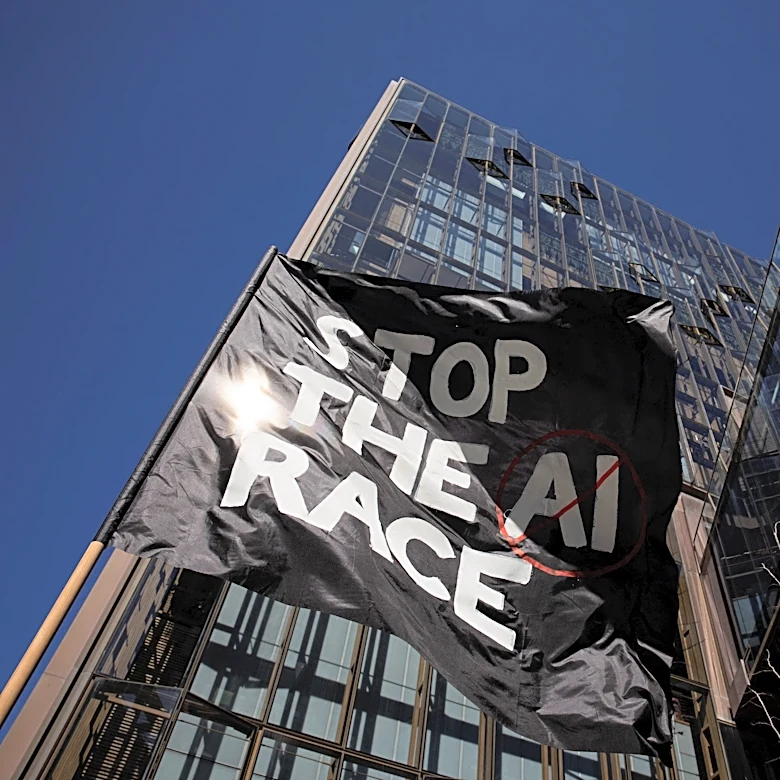
The ongoing debate among GOP lawmakers regarding AI regulation is crucial for the future of the U.S. technology sector and national security. The differing perspectives highlight a fundamental tension between fostering innovation and implementing necessary safeguards. If lawmakers act swiftly, as advocated by Rep. Obernolte, it could lead to early regulatory frameworks that shape the development and deployment of AI, potentially preventing unforeseen societal risks but also possibly stifling technological advancement. Conversely, a cautious approach, as suggested by Rep. Downing and Rep. Knott, could allow for continued rapid innovation, but might leave the U.S. vulnerable to the potential dangers highlighted by AI industry leaders. The involvement of President Trump, who dismisses the need for extensive regulation, adds another layer of complexity, potentially influencing the political will to enact comprehensive AI legislation. The outcome of this debate will determine how the U.S. positions itself in the global AI race, impacting its economic competitiveness, ethical standards, and national security posture.
What's Next?
The debate over AI regulation is expected to continue, with various legislative proposals likely to emerge. Rep. Mike Lawler, R-N.Y., and Rep. Josh Gottheimer, D-N.J., are already pushing legislation to address 'rogue' AI agents, aiming to establish standards through the National Institute of Standards and Technology (NIST) for monitoring and controlling AI systems. This suggests a move towards establishing technical standards and oversight mechanisms rather than a complete moratorium on AI development. The differing opinions within the Republican party, coupled with President Trump's skepticism, indicate that any comprehensive AI legislation will face significant challenges and require bipartisan consensus. Lawmakers will likely continue to hear from both AI industry leaders advocating for regulation and those who believe it could hinder innovation. The focus will be on finding a balance that allows for technological progress while mitigating potential risks, possibly through targeted legislation addressing specific AI applications or capabilities rather than broad, sweeping regulations.
Beyond the Headlines
Beyond the immediate legislative discussions, this debate touches upon deeper philosophical and economic implications. The skepticism from some GOP lawmakers regarding the motivations of Big Tech companies in calling for regulation raises questions about potential anti-competitive practices disguised as safety concerns. This highlights the ongoing tension between established tech giants and emerging innovators, and how regulatory frameworks could inadvertently favor one group over another. Furthermore, the discussion about a 'kill switch' for AI, as mentioned by Rep. Jimmy Patronis, R-Fla., underscores the profound ethical considerations surrounding autonomous AI systems and the ultimate control humans should retain. The varying levels of understanding and expertise within Congress regarding complex AI technologies also point to a broader challenge in governing rapidly evolving scientific fields. This situation could lead to a more informed and specialized approach to policymaking, potentially involving greater collaboration between technical experts and legislators to craft effective and future-proof regulations.