
What's Happening?
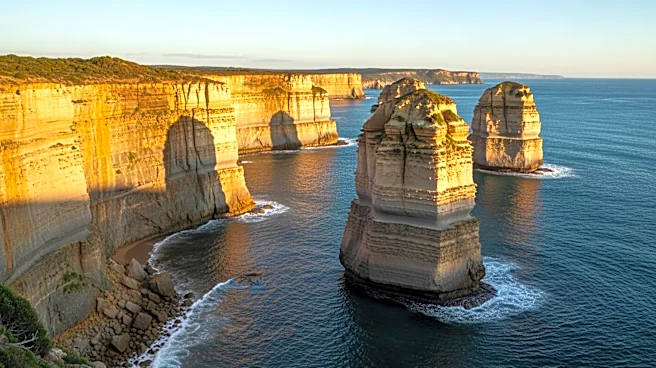
Researchers at the University of Melbourne have provided new insights into the formation of Australia's Twelve Apostles, a series of limestone stacks off the coast of Victoria. The study, led by Associate
Professor Stephen Gallagher, reveals that tectonic plate movements over millions of years gradually lifted and tilted these rock formations from the ocean. This geological activity has turned the Apostles into a significant record of past environmental conditions, offering insights into ancient climates and sea levels. The research indicates that the Apostles are younger than previously thought, with rock layers dating between 8.6 to 14 million years old. The findings, published in the Australian Journal of Earth Sciences, also highlight that the dramatic pillars visible today were shaped more recently by coastal erosion following the last Ice Age.
Why It's Important?
The study of the Twelve Apostles provides valuable information about Earth's geological history and climate changes. By understanding the tectonic processes that formed these structures, scientists can gain insights into past climate conditions and predict future changes. This research is crucial for understanding how ancient geological processes continue to influence modern coastlines and erosion patterns. The findings also emphasize the importance of preserving these natural landmarks, as they serve as a 'window back in time' to study historical climate and environmental shifts. The research could inform future conservation efforts and enhance our understanding of how current climate change might affect similar coastal formations worldwide.