





What's Happening?
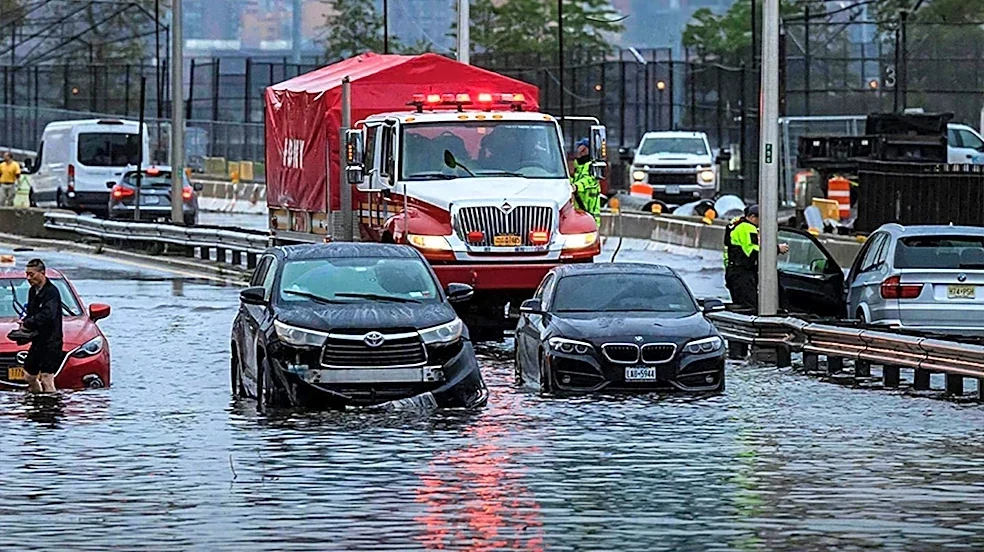
Manhattan is highly susceptible to flooding, with stormwater being the most widespread exposure, affecting 47% of lots at moderate or high risk. Sewer backup is the second most common issue, impacting 10% of lots. Flash flooding occurs when rainfall exceeds
the capacity of local sewer systems, with rain-driven backups now being the primary cause of sewer issues. The Chelsea, Financial District, and Gramercy neighborhoods are identified as having the largest share of lots at moderate or high risk for stormwater. While 4.6% of Manhattan lots are within FEMA's 1% annual-chance floodplain for coastal and river flooding, a significant portion of damage from events like Hurricane Ida occurred outside these federally designated floodplains, highlighting the pervasive nature of stormwater and sewer-related flooding.
Why It's Important?
Manhattan's vulnerability to flooding, particularly from stormwater and sewer backups, poses substantial risks to its dense urban environment, critical infrastructure, and economic activities. The inability of existing sewer systems, some designed to drain only 1.75 inches of rain per hour, to handle intense rainfall events like Hurricane Ida (which brought 3.15 inches in a single hour) leads to widespread disruption and damage. This issue affects not only property owners but also public health due to sewer overflows. The fact that much of the damage occurs outside FEMA floodplains indicates a broader, underestimated risk that current federal mapping does not fully capture. This necessitates a re-evaluation of flood preparedness and infrastructure investment strategies for the borough.
What's Next?
Addressing Manhattan's flood exposure will require a multi-faceted approach. This includes upgrading and expanding the city's sewer infrastructure to handle increased rainfall intensity. The Department of Environmental Protection (DEP) will likely need to continue its efforts to mitigate rain-driven sewer backups, which are now the most common type. Property owners, especially those in vulnerable areas or with basements below sewer lines, may need to implement individual mitigation measures. Furthermore, there is a need for more comprehensive flood mapping that accounts for stormwater and sewer backup risks, beyond traditional coastal and river flooding. This will enable better urban planning, zoning regulations, and emergency response strategies to protect the borough from future flood events.
Beyond the Headlines
Manhattan's flood challenges underscore the broader implications of climate change on highly urbanized areas. The issue is not just about heavy rain, but also about the cumulative impact of impervious surfaces, aging infrastructure, and the historical development patterns that have shaped the city. The prevalence of sewer backups highlights a public health concern, as combined sewer systems can lead to the discharge of untreated wastewater during heavy rainfall. This situation also raises questions about environmental justice, as flood impacts can disproportionately affect certain communities or types of housing. Long-term resilience will require innovative urban design, green infrastructure solutions, and a coordinated effort between city agencies, property owners, and community groups to adapt to a changing climate.