


What's Happening?
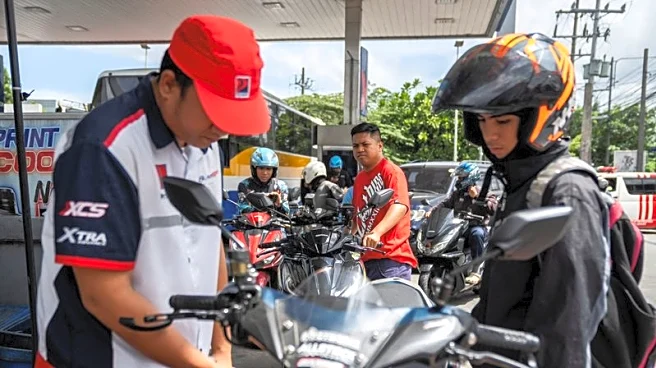
Southeast Asian countries are experiencing significant fuel shortages as the Strait of Hormuz remains closed due to the ongoing United States-Israeli conflict with Iran. This closure has disrupted a critical oil transit route, affecting countries like
Vietnam and Indonesia, which heavily rely on fuel imports. Vietnam plans to procure 4 million barrels of crude oil from non-Middle Eastern countries, which would only suffice for six days of consumption. Indonesia maintains a fuel reserve of about 21-23 days. In response to the crisis, several countries have implemented measures such as four-day work weeks in the Philippines, remote work policies in Thailand and Vietnam, and fuel rationing in Bangladesh and Myanmar. Airlines are also increasing fares and fuel surcharges due to volatile oil prices and potential jet-fuel shortages.
Why It's Important?
The closure of the Strait of Hormuz has highlighted the vulnerability of Southeast Asian countries to energy supply disruptions. These nations, despite having substantial fossil fuel resources, depend heavily on imported oil and gas, much of which passes through the Strait. The crisis underscores the need for these countries to diversify their energy sources and build more robust energy reserves. The International Energy Agency's decision to release 400 million barrels of oil from emergency reserves is a temporary relief but does not address the long-term energy security challenges. The situation could lead to increased inflation and economic slowdown in the region, affecting industries and consumers alike.
What's Next?
If the Strait of Hormuz remains closed, Southeast Asian countries may face prolonged energy shortages, leading to higher fuel prices and more stringent rationing measures. Governments might need to explore alternative energy sources and strengthen regional cooperation to mitigate the impact. The ongoing situation could also prompt a reevaluation of energy policies and investments in renewable energy to reduce dependency on imported fossil fuels. Additionally, the economic impact could lead to political and social unrest if not managed effectively.
Beyond the Headlines
The current crisis could accelerate the transition towards renewable energy in Southeast Asia, as countries seek to reduce their reliance on imported oil. This shift could have long-term environmental benefits and contribute to global efforts to combat climate change. However, the transition will require significant investment and policy support to overcome existing infrastructure and technological challenges. The situation also raises ethical questions about energy equity and the responsibility of wealthier nations to support developing countries in building sustainable energy systems.