

What's Happening?
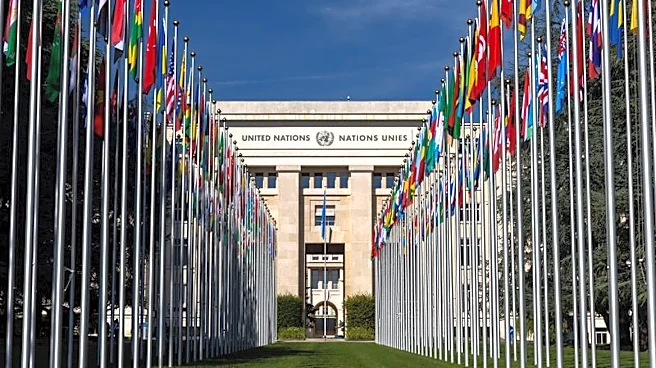
The UN human rights office (OHCHR) has issued a strong condemnation of Egypt's escalating crackdown on press freedom, highlighting the detention of six journalists from the fact-checking website Matsadash. These journalists—Mohamed Ashraf Abu Emeira,
Abdallah Qadry, Islam Barakat, Omar Helal, Mohamed Mahmoud, and Mohamed Adel—reportedly remain in detention and have alleged torture and forced confessions. Additionally, Lina Attalah, chief editor of the independent online news outlet Mada Masr, faces ongoing judicial harassment, including a recent conviction for operating an unlicensed website, which led to its closure. The OHCHR spokesperson, Thameen Al-Kheetan, emphasized that these actions represent a widening assault on independent media by Egyptian authorities, urging an immediate end to such practices and calling for journalists to operate without intimidation or reprisals. The UN office has demanded the release of all Matsadash reporters and the overturning of measures suppressing Matsadash and Mada Masr, asserting the Egyptian people's right to access diverse views on public concerns.
Why It's Important?
The systematic suppression of independent media in Egypt, as detailed by the UN human rights office, has significant implications for global press freedom and democratic principles. When governments target fact-checking sites and independent news outlets, it creates an environment where disinformation can flourish, and public debate becomes skewed. This erosion of journalistic integrity not only stifles dissent but also deprives citizens of crucial information necessary for informed decision-making. The alleged torture and forced confessions of journalists represent severe human rights violations, undermining the rule of law and international norms. The UN's intervention underscores the international community's concern over these developments, suggesting potential diplomatic pressure or sanctions if the situation does not improve. For the U.S., a decline in press freedom in a key regional ally like Egypt could complicate foreign policy objectives, particularly those related to human rights and democratic governance, and may influence aid considerations.
What's Next?
The OHCHR has called for immediate action from Egyptian authorities, including the release of all Matsadash reporters and an end to the harassment of journalists and media outlets. They also demand prompt investigations into allegations of torture, ill-treatment, and forced confessions, with those responsible held accountable. The UN office expects the measures taken against Matsadash and Mada Masr to be overturned. Future developments will likely involve continued monitoring by international human rights organizations and potential diplomatic pressure from countries advocating for press freedom. The ongoing legal proceedings against Lina Attalah, including a new hearing in a separate case, will be closely watched as indicators of the Egyptian government's willingness to uphold due process and fair trial rights. The response of the Egyptian government to these international calls will determine the trajectory of press freedom in the country and its standing in the global community.
Beyond the Headlines
The crackdown on independent media in Egypt reflects a broader global trend of declining press freedom, as noted by the Reporters Without Borders' 2026 World Press Freedom Index, where Egypt ranks 169th out of 180 nations. This situation highlights the critical role of independent journalism in maintaining a healthy democracy and the dangers posed by its suppression. The targeting of fact-checking organizations, in particular, suggests an attempt to control narratives and limit public access to verified information, which can have profound societal impacts, including increased polarization and a weakening of civic engagement. The ethical implications of alleged torture and forced confessions are severe, raising questions about state accountability and the protection of human rights under authoritarian regimes. This development also underscores the challenges faced by journalists globally, who often operate under threat of reprisal for their work, and the ongoing struggle to uphold the principles of free expression in an increasingly complex geopolitical landscape.