



What's Happening?
The United States and Indonesia have entered into a new trade agreement that strengthens economic ties by focusing on critical minerals and energy resources. The deal allows U.S. investors greater access to Indonesia's mineral wealth, including nickel,
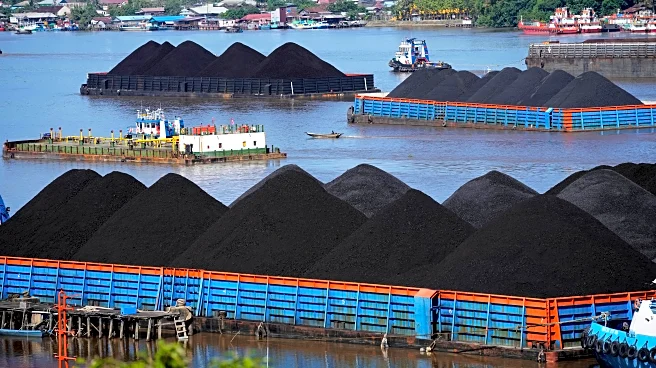
which is essential for electric vehicles and clean energy systems. In exchange, Indonesia will increase its purchases of U.S. crude oil and liquefied petroleum gas. The agreement also includes cooperation on small modular nuclear reactors and the development of an American coal export corridor. The U.S. has reduced a proposed 32% tariff on Indonesian goods to 19% and granted zero-tariff entry for key Indonesian exports like palm oil and coffee. This deal aligns with U.S. efforts to secure mineral supply chains and reduce reliance on China.
Why It's Important?
This trade agreement is significant as it represents a strategic move by the U.S. to secure critical mineral resources necessary for technological and energy advancements. By gaining access to Indonesia's mineral reserves, the U.S. aims to bolster its position in the global supply chain for electric vehicles and renewable energy technologies. The deal also reflects a shift in U.S. energy policy under President Trump, emphasizing fossil fuel exports. For Indonesia, the agreement offers economic benefits through increased access to the U.S. market and investment in its mineral sector. However, it also places Indonesia in a delicate position between U.S. and Chinese interests, as China remains a major investor and market for Indonesian resources.
What's Next?
The trade agreement requires ratification by Indonesia's parliament, which could face challenges due to domestic concerns, such as the dilution of halal certification requirements. Additionally, the U.S. Supreme Court's ruling against President Trump's global tariffs introduces uncertainty about the agreement's future. Other Southeast Asian countries are closely monitoring the deal, as it may influence their own trade negotiations with the U.S. The agreement's impact on Indonesia's energy transition policies is also under scrutiny, with potential implications for its commitment to reducing carbon emissions and expanding renewable energy.
Beyond the Headlines
The trade deal highlights the geopolitical competition over critical minerals, with the U.S. seeking to counter China's dominance in this sector. It also underscores the complexities of balancing economic growth with environmental sustainability, as Indonesia navigates its energy needs and climate commitments. The agreement may prompt Indonesia to prioritize fossil fuel use over renewable energy development, potentially slowing progress in areas like solar energy. This shift could have long-term implications for Indonesia's energy landscape and its role in global climate initiatives.