





What's Happening?
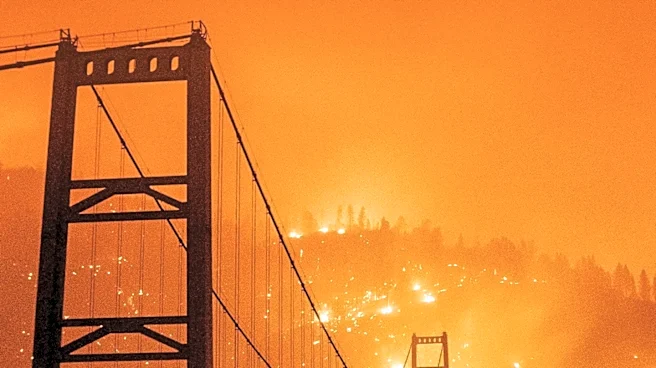
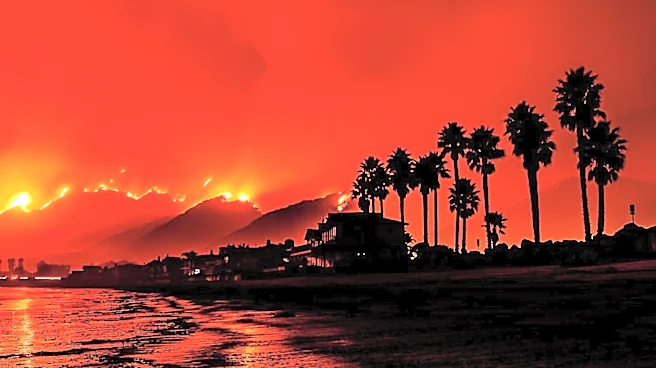
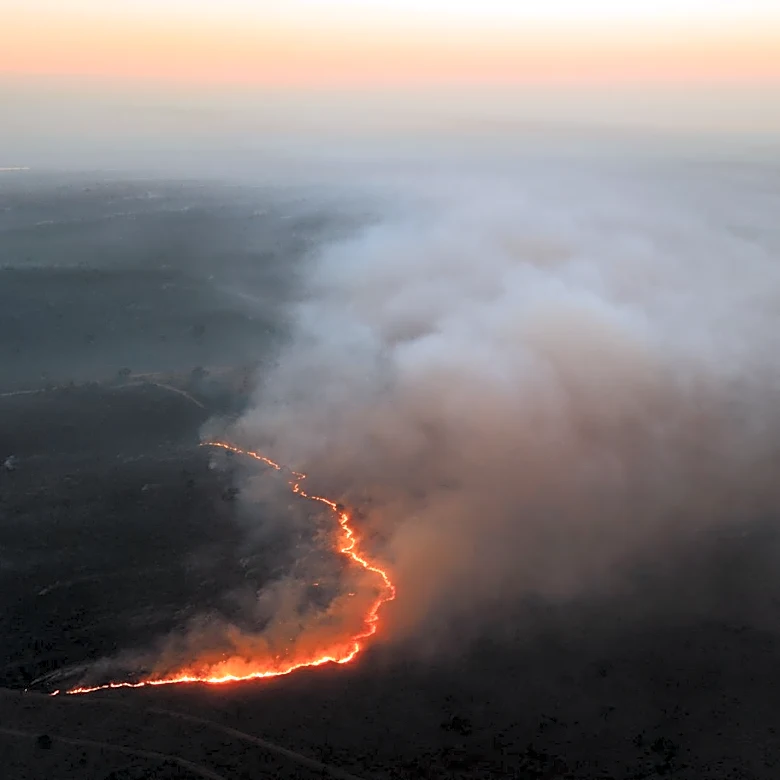
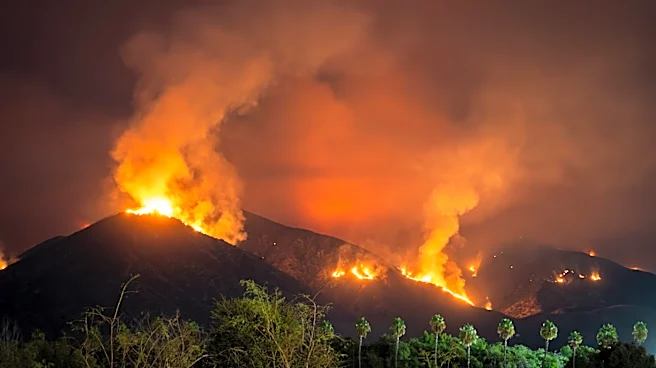
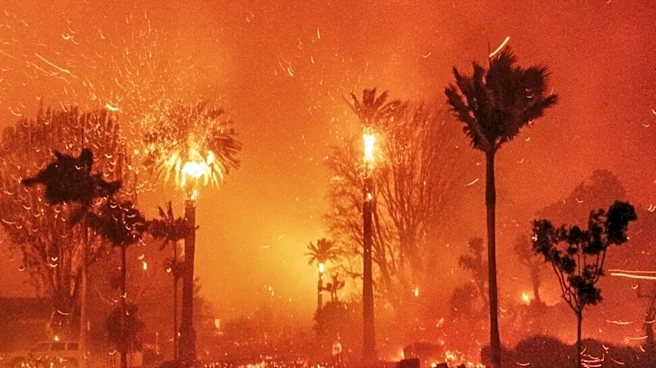
Southern California is experiencing a significant heat wave, with temperatures forecasted to be 10 to 17 degrees above normal. The National Weather Service has issued a red flag warning for areas including L.A. County's I-5 corridor and the Ventura County mountains,
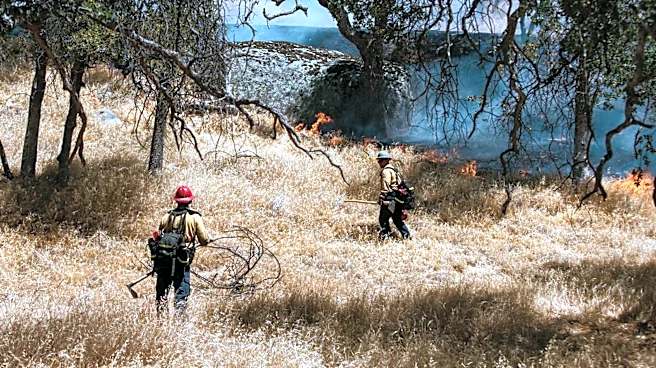
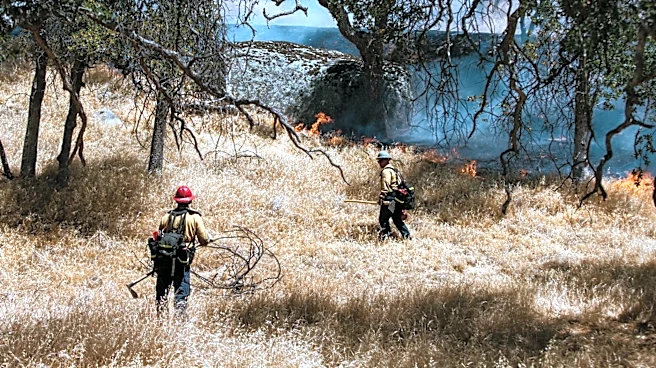
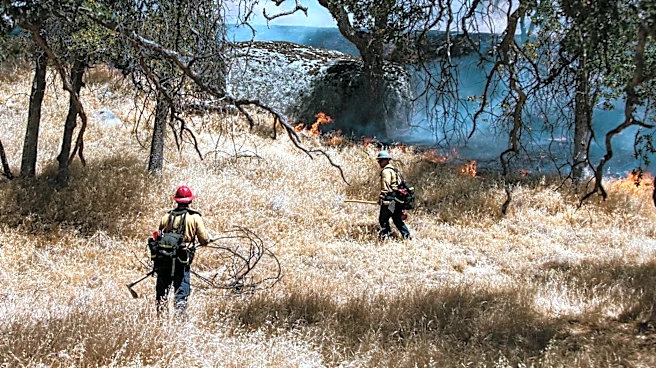
indicating a high risk of wildfires due to strong winds and hot temperatures. The heat wave is expected to peak on Wednesday, with temperatures in L.A. valleys reaching triple digits, particularly in Woodland Hills, which could see temperatures between 105 to 110 degrees. The combination of heat and monsoonal moisture is creating humid conditions, with humidity levels reaching 50% to 55% in downtown Los Angeles. In response, the Los Angeles County Fire Department has pre-deployed resources, including fire engines and water tenders, to mitigate potential fire outbreaks.
Why It's Important?
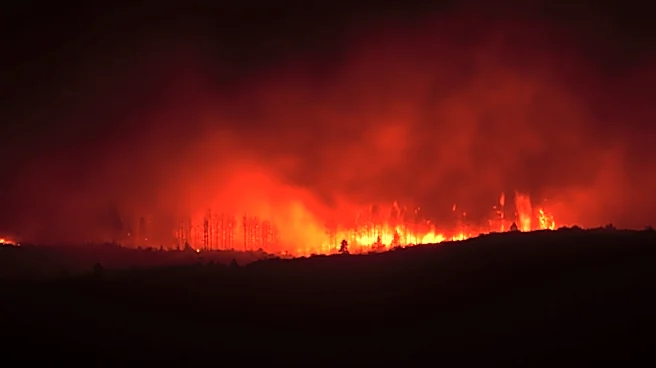
The elevated fire risk in Southern California poses a significant threat to both the environment and local communities. Wildfires can lead to devastating property damage, loss of life, and long-term ecological impacts. The pre-deployment of firefighting resources highlights the seriousness of the situation and the need for preparedness. Additionally, the heat wave underscores the broader issue of climate change, as scientists have noted that global warming is contributing to more frequent and severe heat waves in the Western United States. This situation serves as a reminder of the urgent need for climate action and disaster preparedness to protect vulnerable regions from the increasing threat of natural disasters.
What's Next?
The current heat wave is expected to subside slightly by Thursday, with temperatures cooling off by 5 to 7 degrees and returning to near-normal levels by Friday. However, the ongoing risk of wildfires remains a concern as the region enters its peak fire season. Local authorities and fire departments will continue to monitor conditions closely and adjust their response strategies as needed. The situation also calls for increased public awareness and preparedness measures, as residents may need to evacuate quickly in the event of a wildfire. Long-term, this event may prompt further discussions on climate resilience and the implementation of policies to mitigate the impacts of climate change.