





What's Happening?
President Trump has sent a proposed civil nuclear energy agreement with Saudi Arabia to Congress. This agreement, reached in July, would permit U.S. companies to export civilian nuclear technology to the kingdom. However, President Trump has stipulated
that the pact will only become effective if Saudi Arabia normalizes relations with Israel, specifically by joining the Abraham Accords. The deal was submitted to Congress on Monday, initiating a 90-session-day period for congressional review. If Congress does not object within this timeframe, the agreement will proceed. The proposed 30-year nuclear deal involves the construction of AP1000 reactors, a project valued at tens of billions of dollars, which would significantly benefit Westinghouse, a company jointly owned by Canada-based Cameco and Brookfield Asset Management. This move follows previous efforts by President Trump during his first term to broker a similar pact and former President Joe Biden's administration also pursued a nuclear deal linked to normalization efforts. Saudi Arabia has consistently demanded an irreversible path to a Palestinian state before formally recognizing Israel.
Why It's Important?
This development carries significant implications for U.S. foreign policy, energy security, and regional stability in the Middle East. By conditioning the nuclear deal on Saudi Arabia's recognition of Israel, President Trump is attempting to leverage a major economic and technological incentive to advance U.S.-brokered peace efforts. The Abraham Accords, established during President Trump's previous administration, aimed to normalize relations between Israel and several Arab and Muslim-majority nations. The inclusion of Saudi Arabia, a key regional power, would represent a substantial expansion of these accords and could reshape the geopolitical landscape of the Middle East. Economically, the deal stands to benefit U.S. companies like Westinghouse, securing lucrative contracts for nuclear reactor construction and potentially creating jobs. However, the deal also raises nonproliferation concerns among some Democratic lawmakers and advocates, who criticize the absence of explicit prohibitions on Saudi Arabia enriching uranium or reprocessing nuclear waste, which are potential pathways to developing nuclear weapons. The outcome of this congressional review will determine the future of U.S.-Saudi nuclear cooperation and its broader impact on regional diplomacy.
What's Next?
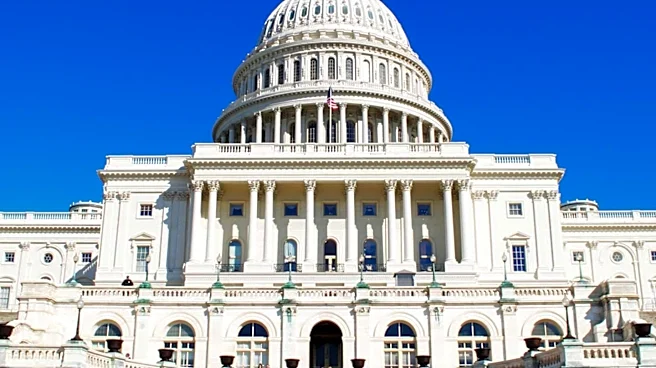
Congress now has 90 session days to consider the proposed nuclear agreement. During this period, the deal is expected to be reviewed by relevant congressional committees. If Congress does not object to the agreement within the specified timeframe, it will go into effect. Should Congress choose to reject the deal, President Trump retains the power to veto that decision, which would then require a two-thirds majority in Congress to override. The Saudi embassy in Washington has not yet commented on the development. The critical factor remains Saudi Arabia's stance on normalizing relations with Israel, particularly given its long-standing demand for an irreversible path to a Palestinian state. The ongoing conflict in Gaza, which began in October 2023, has complicated normalization efforts, as diplomats previously believed Riyadh was close to recognizing Israel in 2023. The coming months will reveal whether the U.S. can successfully link these two complex diplomatic objectives.
Beyond the Headlines
The intertwining of a major nuclear energy deal with a highly sensitive diplomatic objective like the normalization of relations between Saudi Arabia and Israel highlights the complex and often transactional nature of international relations. This approach could set a precedent for future U.S. foreign policy, where significant economic and technological incentives are used to achieve broader geopolitical goals. However, it also underscores the potential risks associated with such strategies, particularly concerning nuclear proliferation. Critics argue that allowing a nation to develop nuclear capabilities without stringent nonproliferation safeguards could destabilize the region, regardless of diplomatic gains. The debate in Congress will likely delve into the balance between strategic alliances, economic benefits, and the imperative of preventing nuclear weapons proliferation. Furthermore, the deal's success hinges on Saudi Arabia's willingness to compromise on its demand for a Palestinian state, a deeply entrenched issue that has historically been a cornerstone of Arab foreign policy. The long-term implications could include a reconfigured Middle Eastern alliance structure or, conversely, increased regional tensions if the conditions are not met.