
What's Happening?
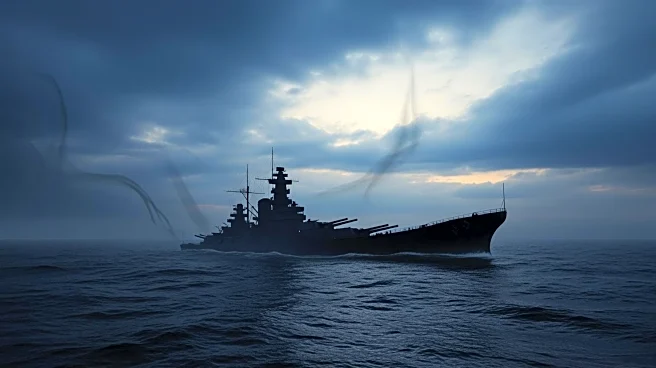
A military court in Moscow inadvertently confirmed that the Russian Black Sea flagship, the Moskva, was sunk by a Ukrainian missile, contradicting the Kremlin's long-standing narrative. The court's statement,
which was quickly removed from its website, detailed the sentencing of a Ukrainian navy commander responsible for the attack. The Moskva, a guided-missile cruiser, was a significant asset for Russia and its loss in April 2022 was a major blow during the early stages of the Ukraine conflict. The Russian Ministry of Defense had previously claimed the ship sank due to a fire and subsequent munitions explosion, with the crew evacuated, although some were reported missing. This admission marks a significant shift in the official Russian narrative, which has been tightly controlled since the conflict began.
Why It's Important?
The admission by the Russian court is significant as it challenges the Kremlin's narrative and highlights the ongoing information war surrounding the Ukraine conflict. The sinking of the Moskva was a major victory for Ukraine, demonstrating its military capabilities and resilience. This revelation could impact Russian public perception and morale, as well as international views on the conflict. It underscores the challenges faced by authoritarian regimes in controlling narratives in the digital age, where information can be rapidly disseminated and preserved despite attempts at censorship. The incident also highlights the broader geopolitical tensions and the complexities of modern warfare, where information and perception are as crucial as military might.
What's Next?
The Russian government's response to this inadvertent admission will be closely watched. It may lead to further scrutiny of Russia's official narratives and potentially embolden Ukrainian and international efforts to counter Russian propaganda. The families of the Moskva's crew, who have been vocal about the incident, may also seek further acknowledgment and accountability from the Russian government. Additionally, this development could influence future diplomatic and military strategies in the region, as stakeholders reassess the situation in light of this new information.