
What's Happening?
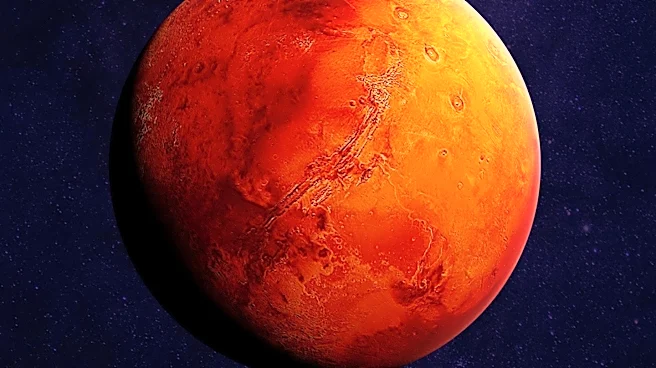
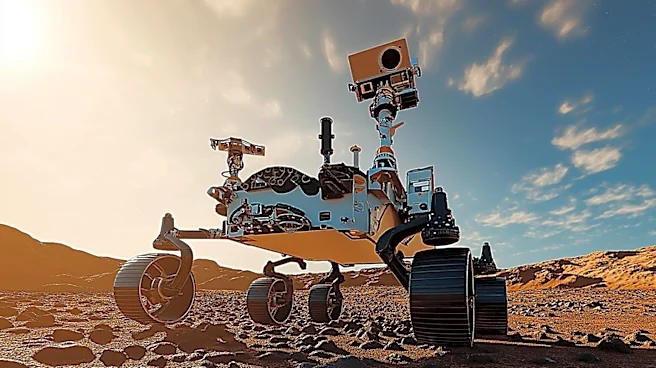
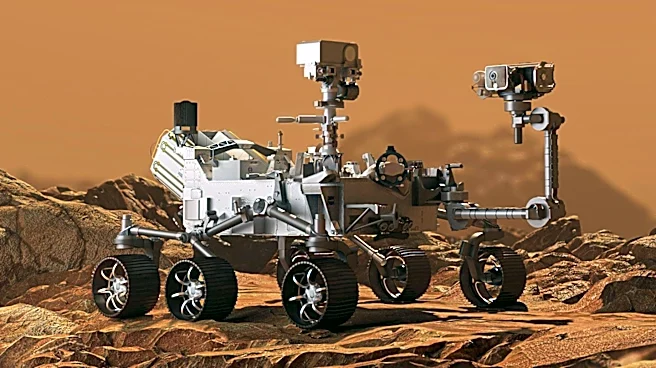
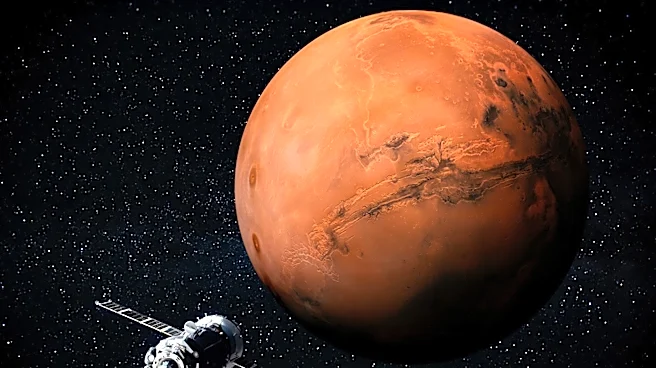
NASA's Curiosity rover has discovered an extensive field of honeycomb-shaped ground fractures on Mars, located in the Valle Grande valley on the lower slopes of Mount Sharp within Gale crater. Captured in a 360-degree panorama, these polygonal patterns
stretch across the landscape, with each fracture measuring approximately 4 to 8 centimeters across. This is the largest such field observed by Curiosity, which has been exploring Mars since 2014. The rover team, led by Dr. Ashwin Vasavada from NASA's Jet Propulsion Laboratory, is investigating the origins of these formations, which may have been created by drying mud, freeze-thaw cycles, or compression forces. The discovery adds to the understanding of Mars' geological history and its past water activity.
Why It's Important?
The discovery of these polygonal fractures is crucial for understanding Mars' geological and climatic history, particularly its past water activity. Such formations can provide insights into the planet's environmental conditions billions of years ago, when lakes and streams were present. The presence of these features suggests that Mars had the right conditions to support life, as indicated by previous findings of carbon-based molecules. Understanding the processes that led to the formation of these fractures could help scientists reconstruct the planet's climatic evolution and assess its habitability. This knowledge is vital for future Mars exploration missions and the search for signs of past life.
What's Next?
Researchers will continue to analyze the data collected by Curiosity to determine the specific mechanisms that formed the honeycomb-shaped fractures. Further exploration of the Gale crater region may reveal additional geological features that can shed light on Mars' history. The findings could guide future missions, such as the Mars Sample Return mission, in selecting sites for sample collection. Continued study of Mars' surface and subsurface will enhance our understanding of the planet's potential to have supported life and inform the development of technologies for human exploration.