
What's Happening?
A recent report by the Global Coral Reef Monitoring Network (GCRMN) reveals a significant decline in the Caribbean coral reefs, with a 48% reduction in hard coral cover from 1980 to 2024. This decline is primarily
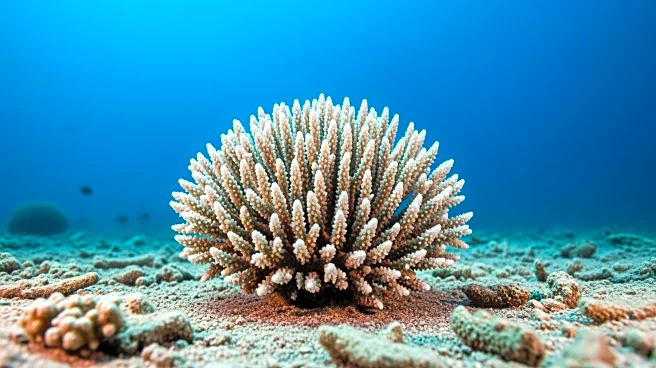
attributed to climate change-induced warming, which causes coral bleaching. The bleaching process occurs when rising sea temperatures stress the corals, leading them to expel the symbiotic algae, zooxanthellae, that provide essential nutrients and vibrant colors. This expulsion results in the corals turning white and becoming more susceptible to disease and death. The report, which involved over 200 scientists from 44 countries, highlights the vulnerability of these ecosystems, which constitute 9.7% of the global coral reef total. The Caribbean reefs have experienced significant die-offs, with losses of 9% in 1998, 17.5% in 2005, and another 16.9% in 2023 due to thermal stress and disease.
Why It's Important?
The decline of Caribbean coral reefs has profound implications for both marine ecosystems and human communities. These reefs are crucial for supporting biodiversity, small-scale fishing, and tourism economies. They also play a vital role in protecting coastlines from swells and storms. The loss of coral reefs threatens marine life and the livelihoods of millions of people who depend on them. Additionally, the report underscores the impact of local human activities, such as pollution and coastal development, which exacerbate the problem. The growing coastal populations have increased by 13 million people within 20 km of the reefs between 2000 and 2020, adding further stress to these ecosystems.
What's Next?
The report calls for urgent action to mitigate the decline of Caribbean coral reefs. Scientists recommend incorporating reefs into regional climate and biodiversity plans, reducing local pressures, and cutting global emissions. There is also a need to enhance marine protected areas to safeguard these underwater ecosystems. Without swift intervention, the reefs face a permanent decline, threatening the ecological balance and economic stability of the region.
Beyond the Headlines
The decline of coral reefs also raises ethical and cultural concerns. The loss of these ecosystems not only affects biodiversity but also impacts cultural heritage and traditional practices linked to the sea. The situation highlights the broader issue of environmental justice, as the communities most affected by the decline are often those least responsible for the contributing factors, such as global emissions. Addressing these challenges requires a collaborative approach that considers both environmental and social dimensions.