





What's Happening?
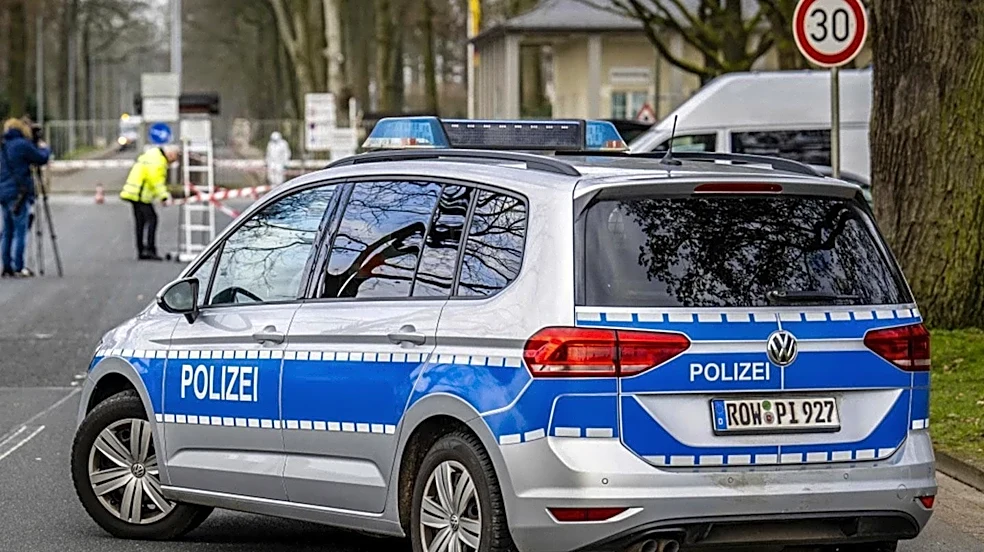
Boulder Police Officers Daniel Colwell and Sam Coffee participated in the Star International Police Exchange program, visiting police departments in Frankfurt, Germany. During their visit, Officer Colwell observed German officers conducting a bar roundup
in a high-crime area, detaining individuals and checking them for contraband without what would be considered probable cause in the U.S. This practice, while common in Germany for approved high-crime zones, would constitute a significant constitutional violation in the United States. The German officers, including Laura Jacobi from Frankfurt and Anna Maywald from Schleswig-Holstein, highlighted differences in public interaction, with Germans generally being more polite and less skeptical towards police compared to their American counterparts. They also noted variations in training, with German officers undergoing approximately three years of academy training versus about six months for American officers. Additionally, the role of firearms in policing differs significantly, as gun ownership is rare in Germany, leading to different operational expectations for officers.
Why It's Important?
The observations made by Boulder Police officers underscore fundamental differences in policing philosophies and public trust between the U.S. and Germany. The German approach, which allows for proactive enforcement in designated high-crime areas without U.S.-style probable cause, reflects a different balance between individual liberties and collective security. This contrast highlights the ongoing debate in American policing regarding methods like stop-and-frisk, which have faced criticism for potential constitutional infringements and disproportionate impact on certain communities. The German model's emphasis on longer, more streamlined training and the standard practice of two officers per patrol car also brings into focus potential areas for improvement or re-evaluation within U.S. police departments, particularly concerning officer safety and professional development. The differing levels of public trust in law enforcement in each country suggest that American police departments face a unique challenge in earning and maintaining community confidence, necessitating greater transparency and accountability.
What's Next?
Following their visit, Officers Colwell and Coffee presented their findings to Boulder Police Chief Steve Redfearn. While they did not identify many concrete practices to directly import from Germany, Officer Coffee renewed his long-standing suggestion of implementing a two-officer per patrol car policy, citing its standard practice in Germany and its potential benefits for officer safety and effectiveness. The Boulder Police Department is likely to continue its focus on community policing and transparency to build public trust, acknowledging the "checkered history" of some American police departments. The insights gained from the exchange program may inform ongoing discussions about police training, operational procedures, and community engagement strategies within Boulder and potentially other U.S. departments participating in similar international exchanges. The German officers, in turn, were intrigued by Boulder's dedicated unit for unhoused communities, suggesting a potential exchange of best practices in social outreach and community connection.
Beyond the Headlines
The comparison between German and American policing extends beyond operational tactics to deeper societal and cultural norms regarding authority, individual rights, and public safety. The German model, with its longer training periods and higher public trust, suggests a societal acceptance of police authority that is less prevalent in the U.S., where historical issues and ongoing debates about police conduct have fostered skepticism. The discussion around proactive enforcement, reminiscent of controversial U.S. policies, highlights the ethical and legal complexities of balancing crime prevention with civil liberties. The differing roles of firearms in each country's policing reflect broader cultural attitudes towards gun ownership and its impact on law enforcement practices. Ultimately, this exchange program serves as a microcosm for understanding how national values and historical contexts shape policing, prompting a re-evaluation of what constitutes effective and equitable law enforcement in diverse societies.