








What's Happening?
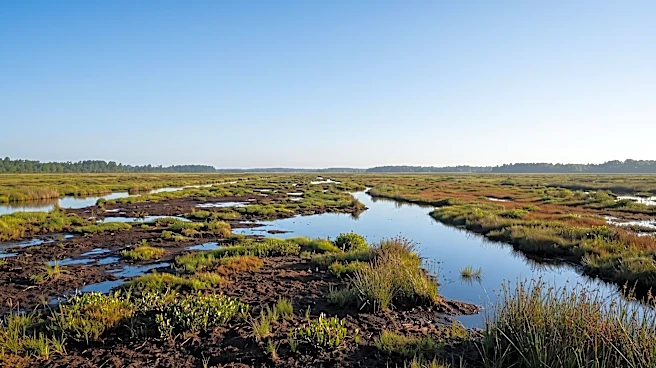
A significant peatland restoration project is underway in North Carolina, led by Colorado-based company Pantheon Regeneration. The initiative focuses on a 23-square-mile tract where decades of drainage ditches, originally dug for an abandoned farming
venture, have left the peatlands vulnerable to drought and wildfires, altering native habitats and releasing 130,000 tons of carbon dioxide annually. Peatlands, while accounting for only 3% of global land surface, store one-third of the Earth’s carbon dioxide. However, when degraded, they become major emitters of greenhouse gases. Pantheon's plan involves blocking ditches to control the water table, culling invasive species, and replanting native flora. This project is modeled after other successful restorations, including the nearby Pocosin Lakes National Wildlife Refuge, one of the largest peatland restoration efforts in the U.S. The company also plans to sell carbon credits to fund the restoration and preservation of a million acres of peatland along the Eastern Seaboard over the next decade.
Why It's Important?
This restoration effort is crucial for both environmental conservation and climate change mitigation in the U.S. Peatlands are vital carbon sinks, storing more carbon dioxide than all forests combined. Their degradation, often due to agricultural practices, transforms them into significant sources of greenhouse gas emissions, contributing approximately 6% of the annual global total. The project in North Carolina addresses this by rewetting and restoring these critical ecosystems, which can significantly reduce carbon emissions and enhance biodiversity. The use of carbon credits as a funding mechanism introduces a market-based solution to environmental conservation, potentially attracting investment from corporations seeking to offset their carbon footprint. This approach could set a precedent for future large-scale ecological restoration projects across the U.S., particularly in regions with threatened peatlands like the Eastern Seaboard. Successful restoration also helps protect threatened and endangered species and provides important stopovers for migratory birds.
What's Next?
Pantheon Regeneration plans to continue its restoration efforts by blocking ditches, managing water levels, and reintroducing native species. The company aims to sell scientifically verified carbon credits to corporations, including initial investor Microsoft, to generate revenue for future land acquisitions and restoration projects. The goal is to restore and permanently conserve a million acres of peatland from Virginia to northern Florida over the next decade, creating large corridors for wildlife and biodiversity hotspots. Ongoing monitoring, including groundwater levels and gas absorption/release measurements, will be conducted and verified by third parties to ensure the effectiveness of the carbon capture. The project also anticipates the return of various native species, including birds, reptiles, plants, and insects, with red wolves already showing signs of successful reintroduction. The success of this model could encourage similar private-sector-led conservation initiatives across the U.S.
Beyond the Headlines
The North Carolina peatland restoration highlights a broader shift towards recognizing and leveraging the ecological and economic value of natural climate solutions. While reforestation often receives significant attention, this project underscores the critical role of peatlands, which store vast amounts of carbon in their soil. The initiative also brings to light the ethical considerations surrounding carbon credits, as past programs have faced scrutiny for exaggerating their impact. Pantheon's commitment to high-quality, scientifically verified credits, backed by extensive data and third-party verification, aims to address these concerns and build trust in the carbon market. This project could influence public policy by demonstrating the effectiveness of private-public partnerships in achieving ambitious conservation goals and by advocating for the protection of underappreciated ecosystems. It also emphasizes the long-term consequences of historical land use practices and the urgent need for restorative action to prevent irreversible environmental damage and massive carbon release from degraded peatlands.