





What's Happening?
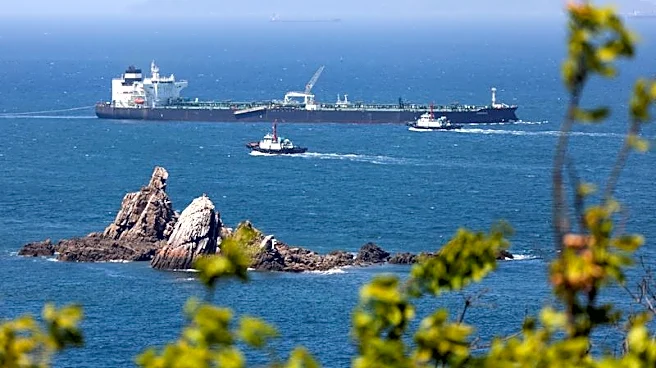
Two tankers carrying crude oil have successfully exited the Strait of Hormuz, a critical maritime chokepoint, with their tracking systems turned off to avoid potential Iranian attacks. This move highlights the ongoing efforts to maintain Middle East oil exports
despite regional conflicts. The very large crude carrier (VLCC) Basrah Energy, loaded with 2 million barrels of Upper Zakum crude from Abu Dhabi National Oil Co's Zirku terminal, exited the strait on May 6 and offloaded its cargo at Fujairah Oil Tanker Terminals on May 8. Another VLCC, the Kiara M, also exited the Gulf with its transponder switched off, carrying 2 million barrels of Iraqi crude. These actions come amid a 10-week-old conflict involving the U.S. and Iran, which has disrupted maritime traffic and increased global energy prices. President Trump recently rejected Iran's proposal for peace talks, which included demands for compensation and the lifting of sanctions, further complicating the situation.
Why It's Important?
The safe passage of these tankers through the Strait of Hormuz is crucial for global oil supply, as the strait is a vital route for one-fifth of the world's oil. The ongoing conflict and Iran's blockade of non-Iranian shipping have heightened tensions and contributed to rising oil prices, impacting global markets. The U.S. and its allies face pressure to resolve the conflict to stabilize energy supplies and prices. The situation also underscores the geopolitical complexities in the region, with Iran asserting its sovereignty over the strait and demanding an end to U.S. naval blockades. The conflict's continuation poses risks to international shipping and energy security, affecting economies worldwide.
What's Next?
With President Trump scheduled to visit China, there is increasing pressure to resolve the conflict and mitigate its impact on the global economy. Diplomatic efforts may intensify, but the rejection of Iran's proposal suggests that a resolution may not be imminent. The U.S. may continue to seek international support to open the strait, though NATO allies have been reluctant to intervene without a comprehensive peace deal. The situation remains volatile, with potential for further disruptions to oil exports and regional stability.
Beyond the Headlines
The conflict in the Strait of Hormuz highlights broader issues of energy security and geopolitical power dynamics. The reliance on this narrow passage for oil transport underscores the vulnerability of global energy supplies to regional conflicts. The situation also raises questions about the effectiveness of international diplomacy in resolving such disputes and the role of major powers in maintaining global stability. The ongoing tensions may prompt countries to seek alternative energy sources or routes to reduce dependency on the strait, potentially accelerating shifts in global energy strategies.