





What's Happening?
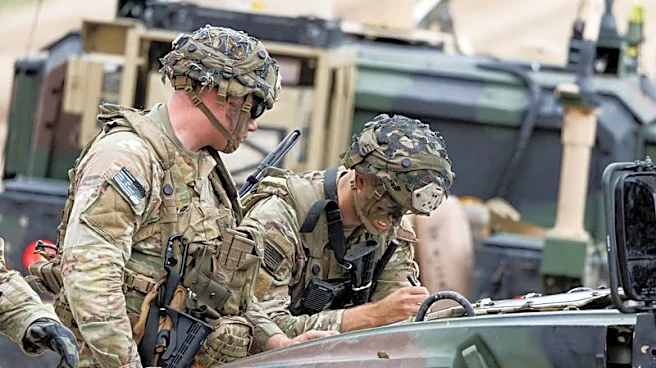
The Trump administration has redirected $52 million in U.S. military assistance from Slovakia, North Macedonia, Tunisia, and Iraq to Panama, Peru, Ecuador, and Colombia. This decision, communicated to Congress by the State Department, signifies a strategic
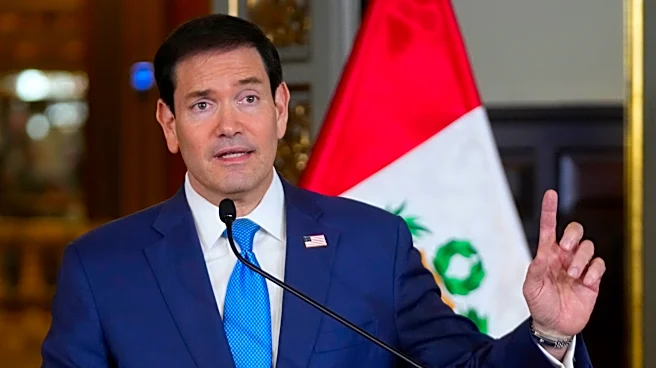
shift in U.S. foreign policy, prioritizing security partnerships within the Western Hemisphere. The reallocated funds, part of the Foreign Military Financing (FMF) program, are intended to bolster efforts against narcoterrorism, enhance security around the Panama Canal, and counter the growing influence of foreign adversaries, particularly China, in Latin America. While the four European and Middle Eastern countries will not lose all U.S. military assistance, the precise amounts remaining for them have not been disclosed. This move follows Secretary of State Marco Rubio’s recent visit to Colombia, Ecuador, and Peru, where he pledged additional U.S. support.
Why It's Important?
This redirection of military aid underscores a significant reorientation of U.S. foreign policy under the Trump administration, emphasizing the Western Hemisphere as a critical region for national security interests. By focusing resources on countries like Colombia, Ecuador, Peru, and Panama, the U.S. aims to strengthen regional stability, combat drug trafficking, and address illegal immigration, which are key priorities for the administration. The move also seeks to counter the expanding economic and diplomatic presence of China in Latin America, preventing potential strategic footholds for adversaries. For the recipient Latin American nations, this aid could enhance their military capabilities and support their internal security efforts. Conversely, the reduction in aid to NATO members Slovakia and North Macedonia, as well as Tunisia and Iraq, could signal a shift in Washington's commitment to traditional alliances and partners in Europe and the Middle East, potentially impacting their defense capabilities and broader geopolitical dynamics.
What's Next?
The U.S. administration has not yet revealed the specific distribution of the $52 million among the four beneficiary countries in Latin America, nor the exact amount Colombia will receive. This detailed allocation will determine the specific capabilities and areas of focus for the additional financing. The countries losing part of their funding will continue to receive some U.S. military assistance, but the reduced amounts may necessitate adjustments in their defense planning and procurement. This policy shift is consistent with President Trump's broader emphasis on the Americas and his administration's renewed discussion of the Monroe Doctrine, suggesting a continued focus on regional security and influence. Future actions will likely involve further integration of these Latin American countries into U.S.-led security initiatives, such as the 'Shield of the Americas' program, to combat drug trafficking and terrorism.
Beyond the Headlines
This reallocation of military aid reflects a deeper strategic recalibration by the Trump administration, moving away from a global distribution of resources towards a more concentrated focus on immediate regional interests. The emphasis on countering China's influence in Latin America highlights a growing geopolitical competition for power and alliances in the Western Hemisphere. This shift could lead to increased U.S. engagement in the internal affairs of Latin American nations, potentially impacting their sovereignty and foreign policy alignments. Furthermore, the reduction in aid to NATO allies could strain existing relationships and prompt European nations to re-evaluate their defense spending and security partnerships. The long-term implications could include a more isolationist U.S. foreign policy, with a reduced commitment to multilateral institutions and traditional alliances, in favor of bilateral relationships that directly serve perceived U.S. national interests in its immediate neighborhood.