




What's Happening?
The Vesper team has withdrawn its current application for a 20,000-seat outdoor concert venue in Provo Canyon, Utah, from the Provo City Council. This decision comes after the planning commission voted 5-2 against recommending approval of zone changes
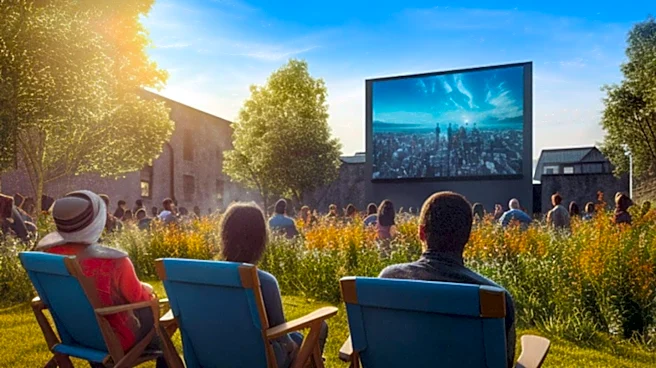
for the project in June, citing concerns over parking and the development's impact on the canyon. The City Council had also discussed the project in recent work sessions. The developers, including Vesper founder Spencer Shumway and executive director David Osmond, intend to submit an amended proposal to address specific issues, particularly regarding the Critical Hillside Overlay Zone and parking requirements. The proposed Vesper Amphitheater, announced in May, aims to transform an existing gravel pit into a world-class venue, with plans for an adjoining hotel, restaurants, parking, and retail. The venue could also be converted into an 8,000-seat indoor facility during winter months. The resubmitted proposal will need to go back to the planning commission before being presented to the City Council.
Why It's Important?
The withdrawal and planned resubmission of the Vesper Amphitheater application highlight significant community and governmental concerns regarding large-scale developments in environmentally sensitive areas. The project's potential impacts on traffic, sound and light pollution, and the preservation of natural resources like Provo Canyon are central to the opposition. Orem city leaders have formally expressed their strong opposition, emphasizing the 'too significant to ignore' impacts on their city, including Mt. Timpanogos Park and traffic on SR-189 and SR-52. This situation underscores the challenges developers face in balancing economic development with environmental protection and community well-being. The outcome of this revised proposal will set a precedent for future developments in the region, influencing how local governments and communities weigh the benefits of economic growth against potential ecological and social costs. It also demonstrates the power of local planning commissions and community feedback in shaping urban and regional development.
What's Next?
The Vesper team is expected to submit an amended application to the Provo City Council, which will then be reviewed. The timeline for this resubmission is currently unknown, with City Council spokesman Daniel Andersen stating that it depends on when the applicant finalizes their new proposal. Once submitted, the revised application will first go back to the planning commission for review and recommendation before it can be presented to the City Council for a final decision. Major stakeholders, including the Provo City Council, Orem city leaders, and community members, will closely scrutinize the new proposal to ensure their previously raised concerns, particularly regarding parking, hillside overlay zones, and environmental impacts, are adequately addressed. The developers' ability to incorporate feedback and mitigate these concerns will be crucial for the project's future. Continued dialogue between Provo and Orem city officials is anticipated as they work towards a long-term vision for the Provo Canyon area.
Beyond the Headlines
This situation extends beyond a single development project, touching upon broader themes of regional planning, inter-city cooperation, and the evolving definition of 'progress' in rapidly growing areas. The Vesper Amphitheater proposal has brought to the forefront the tension between capitalizing on tourism and entertainment opportunities and preserving the unique natural and recreational value of areas like Provo Canyon. The formal opposition from a neighboring city like Orem highlights the interconnectedness of urban areas and the need for collaborative regional planning, especially for projects with cross-jurisdictional impacts. The emphasis on 'appropriate zoning, transportation modes, and economic impacts' by the Provo City Council suggests a comprehensive evaluation process that could influence future development guidelines for similar projects in Utah. This case could serve as a model for how communities and developers navigate complex environmental and infrastructural challenges in pursuit of large-scale ventures.