


What's Happening?
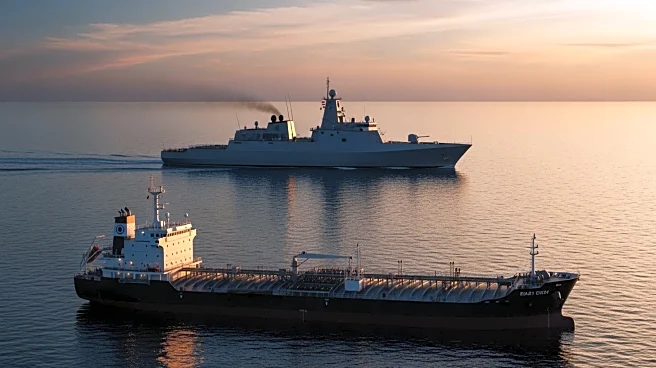
Marine insurers have announced the cancellation of war risk coverage for vessels operating in the Persian Gulf and surrounding waters due to escalating tensions between Iran and the U.S. and Israel. This decision follows retaliatory attacks by Iran in response
to strikes from the U.S. and Israel, which have increased risks to commercial shipping. The conflict has resulted in at least three tankers being damaged, a seafarer killed, and 150 ships stranded around the Strait of Hormuz. The cancellation of war risk cover by companies such as Gard, Skuld, NorthStandard, and others will take effect from March 5. The situation has also led to a significant rise in global oil prices, with a 9% increase reported.
Why It's Important?
The cancellation of war risk coverage by major marine insurers highlights the severe impact of geopolitical tensions on global trade and energy markets. The Strait of Hormuz is a critical chokepoint for global oil supply, with about one-fifth of the world's oil passing through it. The increased risk and insurance costs could lead to higher shipping rates, affecting the global supply chain and potentially leading to increased fuel prices worldwide. This development underscores the vulnerability of international trade routes to regional conflicts and the broader economic implications of such disruptions.
What's Next?
As the situation remains fluid, further escalation could lead to more stringent measures by insurers and shipping companies, potentially affecting global oil supply and prices. Stakeholders in the shipping and energy sectors will need to closely monitor developments and adjust their risk management strategies accordingly. The international community may also seek diplomatic solutions to de-escalate tensions and ensure the safety of commercial shipping in the region.