



What's Happening?
In early 2025, a critical ocean system in Panama experienced a significant failure, marking the first recorded absence of the Panama upwelling in over four decades. This event, detailed in a study published in the Proceedings of the National Academy of Sciences,
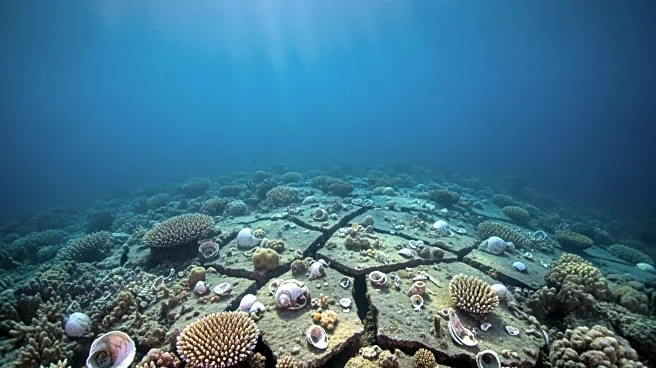
was attributed to a sharp decline in the frequency of Panama wind jets, which are essential for driving the upwelling process. The failure led to unusually warm surface waters and a lack of nutrient-rich upwelling, resulting in significant ecological impacts, including widespread coral bleaching and declines in fish populations. The study, conducted by researchers from the Smithsonian Tropical Research Institute and other international partners, utilized satellite observations and field measurements to analyze the event.
Why It's Important?
The collapse of the Panama upwelling system has significant implications for marine ecosystems and fisheries in the region. The upwelling is crucial for bringing nutrient-rich waters to the surface, supporting phytoplankton growth, and sustaining fish populations that are vital for local fisheries. The failure of this system has led to a decline in phytoplankton, affecting the entire food chain and causing economic and ecological stress. This event highlights the vulnerability of tropical upwelling systems to changes in atmospheric conditions and underscores the need for improved monitoring and modeling to predict and mitigate such disruptions.
What's Next?
The study's authors recommend increased investment in observational infrastructure and enhancements in climate models to better represent wind-ocean dynamics. This is crucial for early detection and response to changes in tropical upwelling systems, which play a significant role in global carbon cycling and climate regulation. The findings also call for expanded monitoring networks in equatorial regions to address current gaps in data coverage, which are essential for understanding and forecasting the impacts of climate variability on marine ecosystems.
Beyond the Headlines
The failure of the Panama upwelling system serves as a warning of potential long-term shifts in ocean-atmosphere interactions due to climate change. The event raises concerns about the resilience of marine ecosystems to environmental stressors and the broader implications for global marine productivity. It also emphasizes the importance of international collaboration in ocean monitoring and research to address the challenges posed by climate change and ensure the sustainability of marine resources.