





What's Happening?
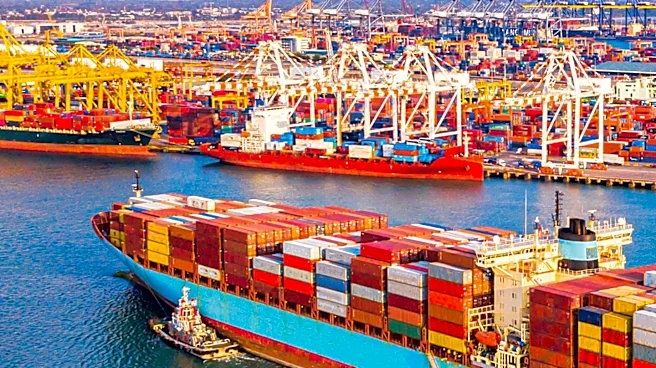
The EU-China trade deficit has reached a record EUR1 billion per day, prompting European leaders to seek a rebalancing of economic relations. Tensions have escalated as the EU targets Chinese companies over illegal products and subsidies, leading to threats
of retaliation from Beijing. European Trade Commissioner Maros Sefcovic met with Chinese Commerce Minister Wang Wentao to stabilize the relationship, setting an October deadline for tangible results. Analysts suggest that rebalancing the deep economic ties is complex due to structural factors, with China's economy being export-driven and heavily subsidized. The EU's trade deficit with China doubled from EUR182 billion in 2020 to EUR360 billion in 2025, with no member state running a trade surplus with China.
Why It's Important?
The growing trade deficit and tensions between the EU and China have significant implications for global economic stability. The EU's efforts to rebalance trade relations could impact industries reliant on Chinese imports, potentially leading to economic disruptions. China's leverage through rare earth exports and the EU's dependence on these materials highlight the strategic importance of the trade relationship. The outcome of these negotiations could influence global trade policies and economic alliances, affecting stakeholders across various sectors, including technology and manufacturing.
What's Next?
The October deadline for EU-China trade negotiations looms, with potential outcomes including agreements on import quotas or further economic confrontations. The EU is developing a diversification instrument to reduce reliance on foreign suppliers, but this initiative will take years to implement. Meanwhile, EU anti-dumping investigations face challenges as Chinese exporters circumvent them. The EU's ability to secure concessions from China will depend on its willingness to endure economic pain and its strategic approach to negotiations.