







What's Happening?
A fueling system problem at Boston Logan International Airport led to an overnight ground stop, causing delays and cancellations for several flights. The Federal Aviation Administration issued the ground stop on Sunday night after a pressure issue prevented
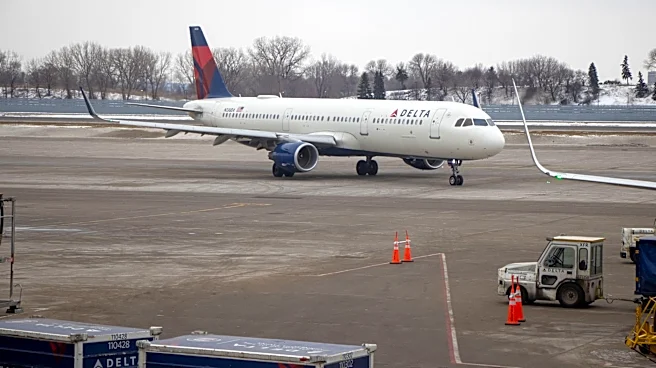
fuel from reaching aircraft from an underground tank. The problem was resolved by midnight, allowing flights to resume. The incident affected many passengers, particularly those flying with Delta Air Lines, who faced long lines and had to rebook flights. Some travelers were forced to spend an extra night in Boston as airlines did not cover hotel costs due to the airport-related issue. The fueling system at Logan Airport is managed by BOSfuel, a consortium of airlines, and a similar outage occurred in 2024.
Why It's Important?
The disruption at Boston Logan Airport highlights vulnerabilities in airport infrastructure that can significantly impact travel plans and airline operations. Such incidents can lead to financial losses for airlines due to flight cancellations and delays, as well as inconvenience for passengers. The reliance on a single fueling system managed by a consortium underscores the need for robust contingency plans to prevent similar occurrences. The incident also raises questions about the maintenance and reliability of critical airport systems, which are essential for smooth operations and passenger satisfaction.
What's Next?
As flights have resumed, the focus will likely shift to investigating the root cause of the fueling issue to prevent future occurrences. BOSfuel and airport authorities may need to review and possibly upgrade the fueling infrastructure to enhance reliability. Passengers affected by the delays may seek compensation or refunds from airlines, prompting discussions on policies regarding airport-related disruptions. The incident may also lead to increased scrutiny of airport operations and infrastructure by regulatory bodies to ensure compliance with safety and operational standards.