


What's Happening?
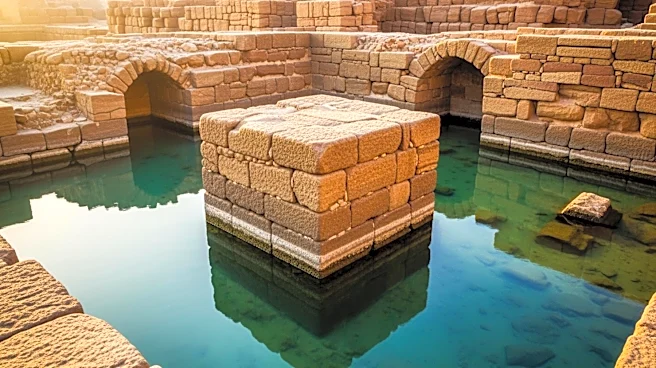
The Egyptian Tourism and Antiquities Ministry has announced the discovery of ancient water reservoirs at the medieval Port of Aydhab, located on the west coast of the Red Sea. This site, near the abandoned town in the Halayeb region on the Egypt-Sudan
border, was a prominent Egyptian port in antiquity. The main reservoir found measures approximately 15.10 meters in length, 3.15 meters in width, and 3 meters in height, constructed from sandstone and local coral, and sealed with limestone to prevent leakage. The archaeological surveys also revealed foundations of residential buildings, watchtowers, and service facilities, indicating a well-developed infrastructure to support trade and pilgrim activities. Pottery fragments from the Fatimid Caliphate era and shards of imported Chinese porcelain were also discovered, underscoring the port's historical role as a hub of international trade.
Why It's Important?
This discovery sheds light on the advanced infrastructure and strategic importance of ancient Egyptian ports in facilitating trade and pilgrimage. The presence of Chinese porcelain and Fatimid-era pottery fragments highlights the port's role in international trade networks, suggesting a historical precedent for global commerce. The findings contribute to a deeper understanding of Egypt's historical economic and cultural exchanges, which have implications for the study of ancient trade routes and economic history. The Egyptian government's increased focus on excavating and studying remote border regions underscores the cultural and historical significance of these areas, potentially boosting tourism and academic interest.
What's Next?
The Egyptian Tourism and Antiquities Ministry plans to continue its focus on excavating and studying border regions and remote areas, recognizing their historical and cultural importance. This ongoing research may lead to further discoveries that could enhance understanding of ancient trade networks and infrastructure. The findings could also attract more international attention and tourism, potentially leading to increased funding and resources for archaeological projects in Egypt. Additionally, the discoveries may prompt further academic studies and collaborations, contributing to the global historical narrative of trade and cultural exchange.
Beyond the Headlines
The discovery of these ancient reservoirs and trade artifacts at the Port of Aydhab highlights the sophisticated engineering and planning of ancient Egyptian infrastructure. The use of local materials and advanced sealing techniques reflects a high level of technological capability. This finding also raises questions about the social and economic structures that supported such developments, offering insights into the governance and resource management of ancient societies. Furthermore, the presence of international trade goods like Chinese porcelain suggests a long-standing tradition of cultural exchange and globalization, challenging modern perceptions of historical isolation.