


What's Happening?
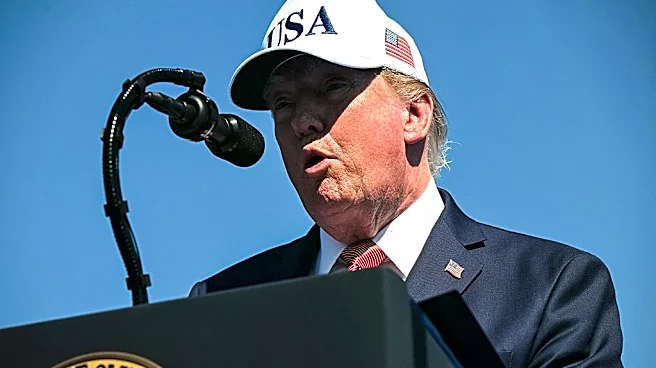
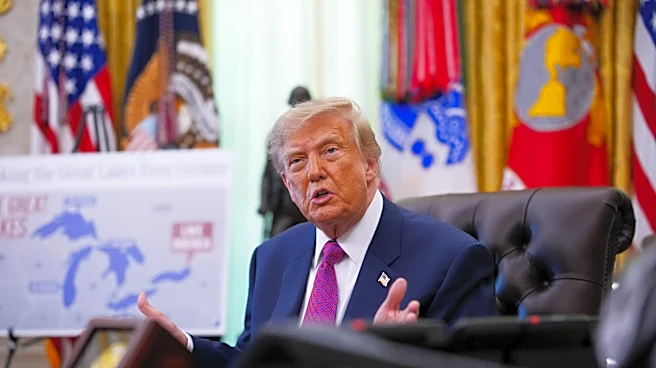
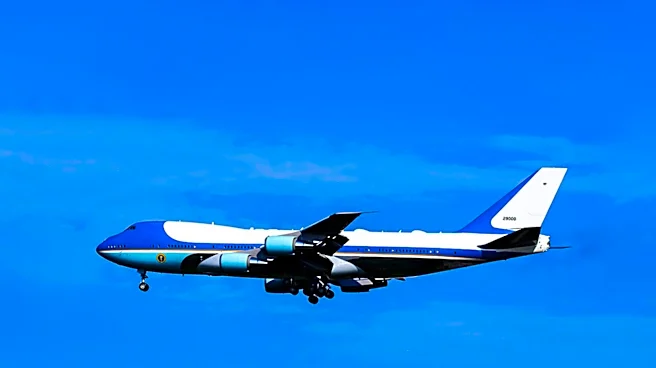
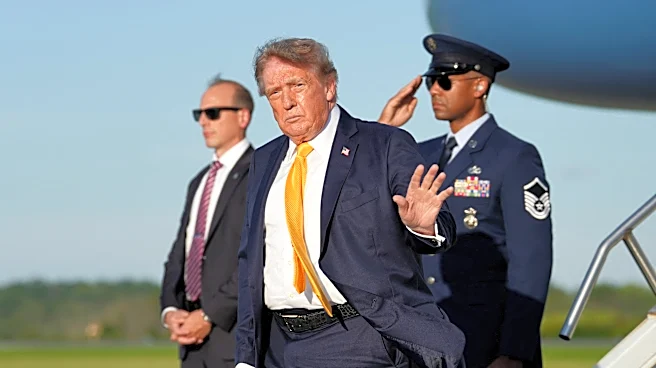
President Trump has recently appeared with a noticeably darker hair color, shifting from his signature light blonde to a more brunette shade. This change was observed during various public events, including press meetings in the Oval Office and his disembarkation
from Air Force One in Morristown, New Jersey, on September 4th. His hair, along with his 'orange-toned tan,' has historically been a subject of public scrutiny, often leading to allegations of toupees or wigs due to its high-volume combover style. The recent alteration in hair color has garnered significant attention on social media platforms, with both supporters and critics commenting on the new look. While President Trump has not publicly acknowledged whether he dyed his hair, the visual change has become a topic of widespread discussion.
Why It's Important?
The focus on President Trump's appearance, particularly his hair color, highlights the intense public and media scrutiny surrounding political figures, even on personal aesthetic choices. This attention can influence public perception and engagement, as evidenced by the reactions on social media. For his supporters, the change has been met with positive comments, suggesting it makes him look 'more youthful' and 'ageless,' which could contribute to a refreshed public image. Conversely, for critics, it adds another layer to ongoing discussions about his public persona. The broader significance lies in how such seemingly minor personal changes can become part of the larger political narrative, demonstrating the constant evaluation of public figures beyond their policy positions or political actions. This phenomenon underscores the role of visual presentation in modern politics and its capacity to generate widespread discussion and varied interpretations among the electorate.
What's Next?
The ongoing discussion about President Trump's hair color is likely to continue as he remains in the public eye, especially with his involvement in political events like the GOP midterm convention in Dallas. While he has not commented on the change, his future public appearances will likely be observed for consistency in this new look. The online discourse, fueled by social media, will probably persist, with various interpretations and reactions from both his base and opposition. This attention to personal details could also prompt further speculation or commentary from former associates, as has happened in the past regarding his makeup routine. The sustained interest in his appearance suggests that such personal aspects will remain a part of the broader narrative surrounding President Trump, influencing how he is perceived by the public and media.
Beyond the Headlines
The extensive public and media focus on President Trump's hair color change, alongside past discussions about his makeup routine, points to a deeper cultural phenomenon where the personal aesthetics of political leaders are meticulously scrutinized. This goes beyond mere superficiality, reflecting a societal tendency to interpret and project meaning onto every aspect of a public figure's image. Such scrutiny can inadvertently humanize leaders, making them relatable or, conversely, exposing them to ridicule. It also highlights the performative aspect of modern politics, where image management is a critical, albeit often unstated, component of political strategy. The reactions, ranging from praise for a 'youthful' look to critical commentary, underscore how personal presentation can subtly influence public opinion and contribute to the overall narrative surrounding a political figure, sometimes overshadowing more substantive policy discussions.