



What's Happening?
The Atlantic Council highlights the critical need for Europe and Gulf Cooperation Council (GCC) countries to unite on an energy transition agenda. This collaboration is seen as essential for diversifying and securing the global energy future, especially
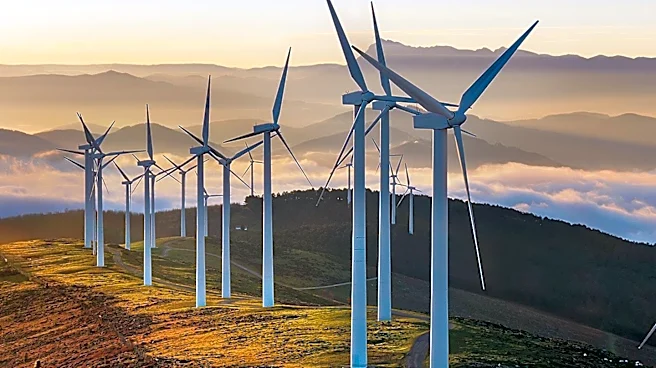
in light of ongoing conflicts like the Russian invasion of Ukraine and the Iran war, which have exposed vulnerabilities in energy security and supply chains. The Middle East currently accounts for approximately 30% of global oil production and nearly 20% of global gas production, positioning GCC producers to play a central role in meeting demand during the transition away from fossil fuels. Europe, a major importer of hydrocarbons from the Gulf, possesses significant green energy expertise that can aid this transition. The Council emphasizes that combining Europe's green energy knowledge with the Gulf's growing investments in clean energy sources, such as solar PV, wind, hydrogen, nuclear, and energy storage, is crucial for a more sustainable and secure energy system. This partnership is also viewed as a way to foster stability in a geopolitical landscape marked by questions over U.S. policy in the Middle East.
Why It's Important?
This proposed collaboration is important for several reasons. For the U.S., a stable global energy market is vital for economic security and geopolitical influence. Disruptions in energy supply, as seen with recent conflicts, can lead to increased prices and economic instability, impacting American consumers and businesses. By fostering a more secure and diversified global energy system, the U.S. can indirectly benefit from reduced volatility and enhanced international cooperation. For Europe, this partnership offers a path to reduce reliance on potentially unstable energy sources and accelerate its green energy goals, aligning with its climate commitments. For Gulf nations, it provides an opportunity to diversify their economies beyond fossil fuels, leverage their significant energy production capacity during the transition, and invest in future-proof energy technologies. The initiative also aims to counter the emboldened stance of actors like Iran, which could disrupt global peace and the economy, by strengthening regional alliances and promoting shared economic interests. Ultimately, a successful energy transition collaboration between Europe and the Gulf could contribute to global stability, economic resilience, and environmental sustainability, all of which have direct and indirect benefits for U.S. interests.
What's Next?
The Atlantic Council's brief suggests that leaders in both Europe and the Gulf should prioritize internal unity and cross-regional cooperation to address formidable challenges facing humanity, particularly in energy security. The next steps would likely involve increased diplomatic efforts and policy discussions between European and GCC nations to identify specific areas for investment and technological exchange in green energy. This could include joint ventures in renewable energy projects, shared research and development initiatives for advanced energy technologies, and the establishment of frameworks for secure energy supply chains. Given the significant role of Middle Eastern hydrocarbon producers in meeting global demand during the transition, there will be ongoing discussions about how to balance continued fossil fuel production with accelerated investments in clean energy. The emphasis on a reliable and stable partnership with Europe also suggests a potential shift in regional alliances, especially as questions arise regarding U.S. policy in the Middle East. The success of these efforts will depend on the political will of the involved parties to overcome existing conflicts and prioritize long-term energy security and sustainability.
Beyond the Headlines
Beyond the immediate economic and geopolitical implications, this initiative touches upon deeper ethical and cultural dimensions. The push for an energy transition represents a global acknowledgment of climate change and the need for sustainable practices, challenging traditional reliance on fossil fuels that have historically driven economic growth in many Gulf nations. This shift requires a re-evaluation of national economic strategies and a commitment to environmental stewardship. Furthermore, the emphasis on European-Gulf cooperation in the context of a changing U.S. role in the Middle East highlights a broader trend towards multipolar international relations, where regional powers and alliances play an increasingly significant role in shaping global outcomes. The ethical imperative to address climate change is intertwined with the practical need for energy security, creating a complex web of considerations for policymakers. The long-term success of such a collaboration could set a precedent for how diverse regions with differing economic structures and geopolitical interests can unite to tackle global challenges, potentially fostering a new era of international cooperation on critical issues like climate and energy.