
What's Happening?
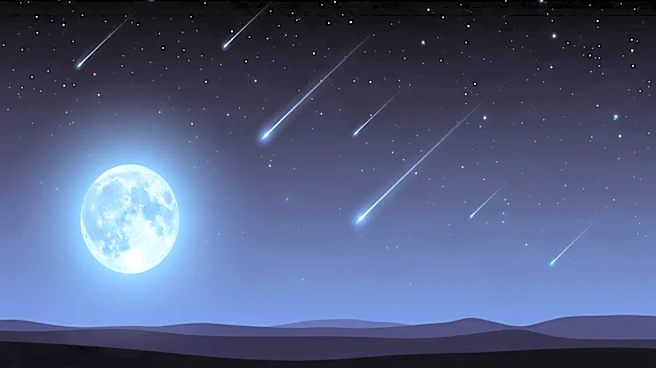
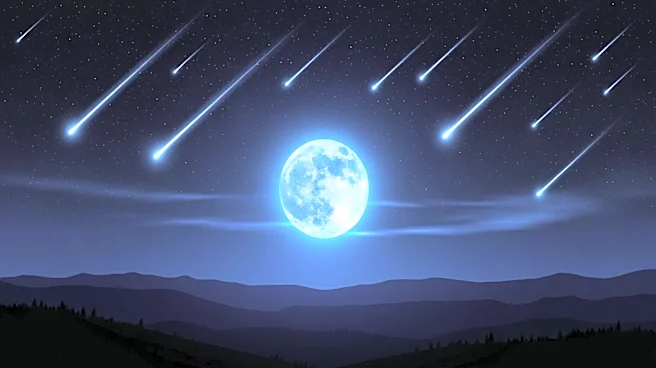
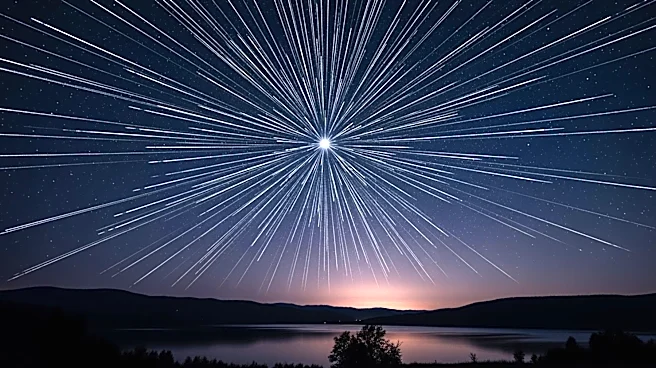
The Eta Aquarid meteor shower is set to reach its peak on the night of May 5-6, offering a stunning celestial display. This meteor shower, which originates from the debris of Halley’s Comet, has been active
since April 19 and will continue until May 28. During its peak, observers can expect to see up to 50 meteors per hour under ideal conditions. The meteors, known for their speed of approximately 66 kilometers per second, will create bright trails across the sky. The best viewing time is before dawn when the radiant, the point from which the meteors appear to emanate, is highest in the sky. Astronomers recommend finding a dark location away from city lights to fully enjoy the spectacle.
Why It's Important?
Meteor showers like the Eta Aquarids offer a unique opportunity for both amateur and professional astronomers to observe and study celestial phenomena. This event not only provides a chance for public engagement with astronomy but also contributes to scientific understanding of cometary debris and its interaction with Earth's atmosphere. The visibility of such events can inspire interest in space science and foster educational opportunities. Additionally, meteor showers are a reminder of Earth's place in the solar system and the dynamic nature of space, potentially influencing public support for space exploration initiatives.
What's Next?
As the Eta Aquarid meteor shower continues until May 28, skywatchers will have multiple opportunities to observe the event, though the peak night offers the best chance for viewing. Astronomers and enthusiasts may organize public viewing events to share the experience and educate the public about meteor showers and their origins. The continued observation of such events can lead to further insights into the behavior of cometary debris and its impact on Earth's atmosphere. Additionally, the data collected during this period can be used to refine models of meteor activity and improve predictions for future showers.