
What's Happening?
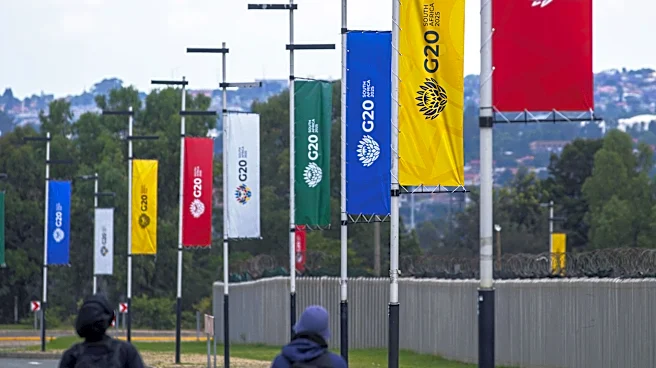
The Swiss environmental ambassador, Felix Wertli, highlighted that G20 countries are collectively responsible for approximately three-quarters of global greenhouse gas emissions. This statement comes as representatives
from 197 countries gather for the 31st UN Climate Change Conference (COP 31) in Antalya, Turkey, from November 9 to 20. Wertli, leading the Swiss delegation, stressed the critical need for G20 nations to establish climate targets consistent with the 1.5-degree goal of the Paris Climate Agreement. Despite a UN Environment Programme (UNEP) report indicating a likely temporary overshoot of this target, Switzerland remains committed to it, advocating for rapid action to reduce global warming. The conference is described as a 'working COP,' focusing on advancing existing commitments and making concrete progress rather than major policy decisions, which are anticipated at COP 33 in two years.
Why It's Important?
The significant contribution of G20 nations to global greenhouse gas emissions underscores their pivotal role in addressing climate change. Their commitment to and implementation of ambitious climate targets are crucial for the success of international efforts, such as the Paris Agreement, to limit global warming. Failure by these major economies to align with the 1.5-degree goal could have far-reaching consequences, including accelerated climate impacts globally, increased frequency and intensity of extreme weather events, and significant economic disruptions. The emphasis on G20 responsibility also highlights the disparity in climate action expectations between developed and developing nations, potentially influencing future climate finance negotiations and the equitable distribution of climate burdens and benefits. The U.S., as a prominent G20 member, plays a critical role in shaping these global climate policies and their effectiveness.
What's Next?
The ongoing COP 31 will likely see continued pressure on G20 nations to outline clearer roadmaps for phasing out fossil fuels and to increase their contributions to climate finance for less wealthy nations. Switzerland, for instance, is advocating for countries like Singapore, Saudi Arabia, and the United Arab Emirates to contribute more. Environmental organizations, such as WWF Switzerland, are pushing for even greater commitments from wealthy nations, including Switzerland itself. The discussions at COP 31 are expected to lay groundwork for more substantial policy decisions at COP 33, where the effectiveness of current commitments and the need for more aggressive targets will be re-evaluated. The U.S. will be a key participant in these future discussions, with its climate policies and international engagement influencing the global trajectory of climate action.
Beyond the Headlines
The disproportionate emissions from G20 countries raise fundamental questions about global equity and climate justice. The call for wealthy nations to contribute more to climate finance reflects a growing recognition of historical responsibility and the need for solidarity in addressing a global crisis. This dynamic could lead to increased diplomatic tensions and complex negotiations as countries balance national economic interests with international climate obligations. The shift towards electrification and renewable energy, as noted by Ambassador Wertli, indicates a broader economic transformation already underway, driven by both policy and market forces. However, the pace of this transition remains a critical challenge, with potential implications for energy security, industrial competitiveness, and labor markets in the U.S. and other major economies.