







What's Happening?
The U.S. Marine Corps is set to release an updated land warfare doctrine as part of its ongoing efforts to adapt to modern combat scenarios, particularly those involving drone technology. This update is part of the Ground Combat Element 2040 plan, which
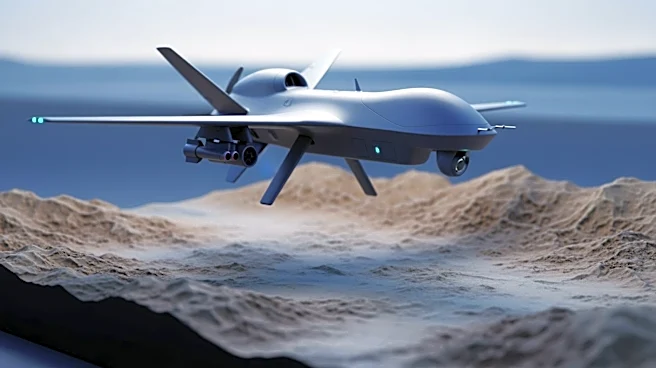
follows the Force Design 2030 initiative aimed at transforming the Marine Corps for future warfare. The new doctrine will focus on enhancing ground combat capabilities while integrating lessons learned from recent conflicts, such as the war in Ukraine. The Marines are also prioritizing the development of counter-unmanned aerial systems (UAS) to address the growing threat of drone warfare.
Why It's Important?
The update to the Marine Corps' land warfare doctrine is crucial as it prepares for potential conflicts with near-peer adversaries, such as China. The emphasis on counter-UAS capabilities reflects the increasing role of drones in modern warfare, necessitating rapid adaptation to new technologies. This shift is significant for national security, as it ensures the Marine Corps remains capable of responding to evolving threats. The doctrine's development also highlights the importance of agility in military planning, as traditional acquisition timelines may not suffice in the face of rapidly changing battlefield dynamics.
What's Next?
The Marine Corps will continue to refine its doctrine and capabilities, with a focus on integrating feedback from ongoing operations and exercises. The release of the updated doctrine is expected in the coming weeks, with further developments in counter-UAS technology anticipated. The Marine Corps will likely engage with industry partners to accelerate the acquisition of advanced systems, ensuring readiness for future conflicts. Additionally, the doctrine's implementation will involve training and equipping units to effectively counter drone threats, maintaining the Corps' operational edge.