






What's Happening?
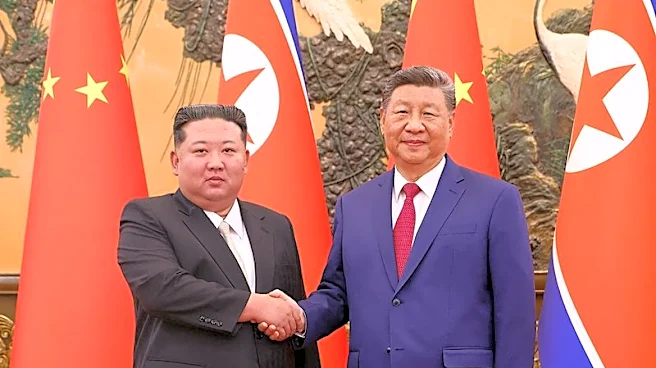
Chinese leader Xi Jinping has arrived in North Korea for a two-day visit, marking his first trip to the country in nearly seven years. The visit aims to revitalize the strained relationship between China and North Korea, which has been affected by a decrease
in trade during the COVID-19 pandemic and North Korea's growing ties with Russia. Xi was welcomed with a red carpet ceremony in Pyongyang, where he met with North Korean leader Kim Jong-un. The two leaders discussed trade and cooperation, with Xi emphasizing China's support for North Korea and the importance of expanding economic and trade cooperation. This visit comes ahead of the 65th anniversary of the China-North Korea friendship treaty, highlighting the historical ties between the two nations.
Why It's Important?
Xi Jinping's visit to North Korea underscores China's strategic interest in maintaining influence over its only formal treaty ally. The visit is significant as it comes at a time when North Korea is strengthening its military ties with Russia, potentially shifting the balance of power in Northeast Asia. For China, maintaining a strong relationship with North Korea is crucial for regional stability and as a counterbalance to U.S. influence in the region. The visit also highlights China's broader geopolitical strategy to assert its leadership role in Asia amid tensions with the United States and other Western nations. The outcome of this visit could impact future diplomatic and economic interactions in the region.
What's Next?
Following Xi's visit, there may be increased diplomatic and economic exchanges between China and North Korea. The two countries might work towards enhancing their trade relations, which were previously hampered by the pandemic. Additionally, the visit could lead to further discussions on regional security issues, particularly concerning North Korea's nuclear ambitions and its military cooperation with Russia. The international community will be closely monitoring any developments from this visit, as they could influence the geopolitical dynamics in Northeast Asia.