









What's Happening?
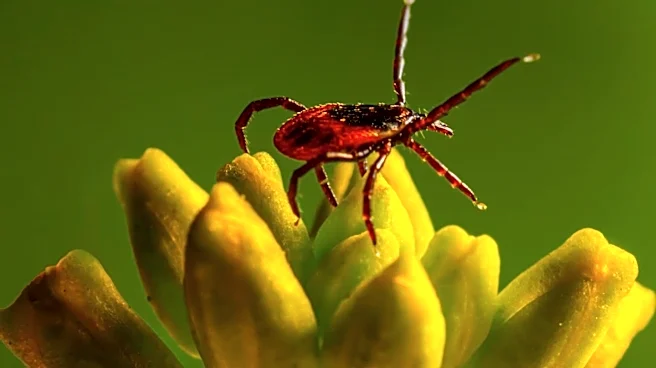
Ticks, often mistakenly categorized as insects, are in fact arachnids, closely related to spiders and scorpions. These small parasites are sanguivores, meaning they feed on blood, which is essential for their survival and development. Ticks possess specialized
barbed mouthparts, known as 'hypostomes,' to firmly anchor themselves to a host's skin. Their saliva contains natural numbing and anti-clotting chemicals, allowing them to feed unnoticed. Ticks also exhibit a behavior called 'questing,' where they can endure long periods between meals by lowering their metabolism while waiting for a host. They are known to transmit a wide array of dangerous pathogens, including bacteria, viruses, and parasites, which can cause serious health issues in both humans and animals. The distinction between ticks and insects is crucial for understanding their biology and the diseases they carry.
Why It's Important?
The correct classification of ticks as arachnids rather than insects is important for public health and scientific understanding. This distinction highlights their unique biological characteristics, such as their eight legs and lack of antennae, which differentiate them from six-legged insects. Understanding their nature as arachnids helps in developing more effective strategies for tick control and disease prevention. Ticks are significant vectors for numerous diseases, and their ability to feed unnoticed due to numbing agents in their saliva increases the risk of pathogen transmission. The diseases they carry can have substantial impacts on human and animal health, leading to various illnesses. Accurate scientific classification underpins targeted research and public awareness campaigns, which are vital for mitigating the health risks associated with tick bites.
What's Next?
Future efforts will likely focus on continued research into tick biology and behavior, particularly given their role as disease vectors. Public health initiatives will need to emphasize accurate information regarding ticks, including their classification as arachnids, to better inform prevention strategies. This includes educating the public on how to identify ticks, understand their feeding habits, and take appropriate measures to avoid bites. Research into the pathogens carried by ticks and the development of new diagnostic tools and treatments for tick-borne diseases will also be critical. As environmental factors, such as climate change, may influence tick populations and geographic distribution, ongoing monitoring and adaptive public health responses will be necessary to manage the evolving risks associated with these arachnids.
Beyond the Headlines
The reclassification of ticks from insects to arachnids underscores the dynamic nature of scientific understanding and its implications for public perception and health. This seemingly minor taxonomic detail has broader consequences for how we approach pest control, disease ecology, and even our general understanding of the natural world. The 'concealed feeding' behavior of ticks, facilitated by their unique saliva, raises ethical considerations regarding the silent and often undetected transmission of diseases. This highlights the vulnerability of both humans and animals to pathogens carried by organisms that can evade immediate detection. The ongoing challenge of managing tick-borne diseases also points to the interconnectedness of environmental health, animal health, and human health, emphasizing the need for a holistic 'One Health' approach to public health challenges.