


What's Happening?
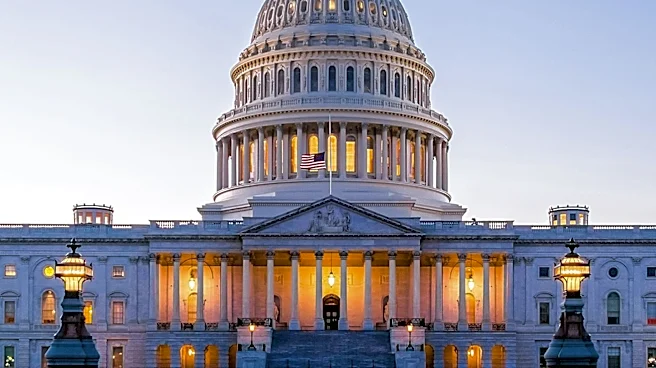
New members of Congress recently participated in an office lottery to determine the order in which they select their new offices, a process likened to an NFL draft. This event is part of a broader orientation for incoming lawmakers, which includes activities
such as group pictures with caucuses, emergency safety training with protective breathing hoods, and even happy hours. Outgoing members, like Congresswoman Nancy Mace, are required to vacate their offices early, sometimes moving into temporary cubicles. For instance, former MLB player and newly elected Texas congressman Mark Teixeira drew the very last pick, number 105, in the lottery. The process highlights the logistical and sometimes humorous aspects of transitioning into a congressional role, from office assignments to the symbolic 'rite of passage' of getting a picture with a congressional subway operator.
Why It's Important?
The congressional office lottery and orientation process, while seemingly mundane, offers a unique glimpse into the operational realities and traditions of the U.S. legislative branch. The allocation of office space, a critical resource for lawmakers, can influence their ability to conduct business, meet with constituents, and collaborate with colleagues. The 'NFL draft' style lottery underscores the competitive nature of congressional life, even in administrative matters. For new members, this orientation is crucial for integrating into the complex environment of Capitol Hill, understanding its protocols, and establishing their presence. The temporary relocation of outgoing members, such as Congresswoman Nancy Mace, also illustrates the continuous cycle of change and renewal within Congress, impacting both the departing and incoming representatives and their staff. This process ensures a structured transition, maintaining the continuity of government operations.
What's Next?
Following the office lottery, new members will proceed with setting up their offices, hiring staff, and preparing for the upcoming legislative session. The physical space they acquire will serve as their base of operations, influencing their daily work and interactions. The orientation period will continue to familiarize them with the Capitol's infrastructure, including the underground subway system, and introduce them to the various caucuses and committees. For the departing members, the process of vacating their offices marks the end of their congressional tenure, leading them to new endeavors outside of federal legislative service. The smooth transition of offices and resources is essential for the efficient functioning of Congress as new legislative priorities and challenges emerge.
Beyond the Headlines
The seemingly trivial details of congressional office assignments and orientation rituals reveal deeper insights into the culture and power dynamics within the U.S. government. The lottery system, while democratic, can subtly influence a new member's initial standing and access to resources, potentially impacting their early legislative effectiveness. The emphasis on tradition, such as taking pictures with the subway operator, highlights the institutional memory and established norms that govern congressional life. Furthermore, the contrast between the public image of powerful lawmakers and the more mundane aspects of their work, like office cubicles and bottled iced tea, humanizes the political process. This behind-the-scenes look can foster a greater understanding of the practical challenges and unique environment in which national policy is debated and enacted, offering a more nuanced perspective on the workings of American democracy.