



What's Happening?
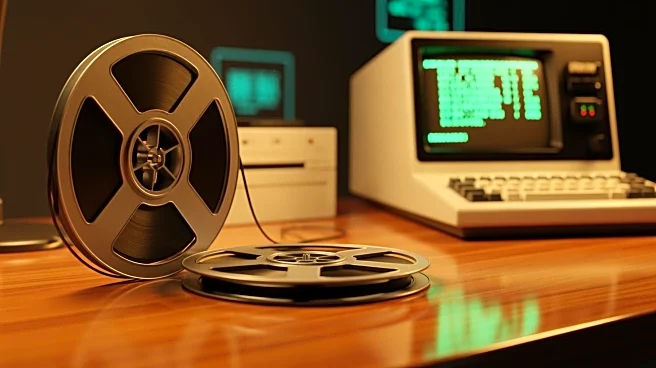
The Computer History Museum has successfully recovered the contents of a UNIX V4 tape, the first version of UNIX written in the C programming language. This recovery was achieved by software curator Al Kossow, who retrieved the data from a 1970s nine-track
tape drive. The tape, discovered at the University of Utah, contained a version of UNIX that was pivotal in the development of modern operating systems. The recovered data is now available for download and can be run using the SimH emulator, allowing enthusiasts and researchers to explore this early version of UNIX.
Why It's Important?
The recovery of UNIX V4 is significant as it provides insight into the early development of operating systems and the evolution of UNIX, which has had a profound impact on modern computing. UNIX's influence extends to various operating systems, including Linux and macOS, and its principles continue to shape software development. By making this early version accessible, the recovery offers educational opportunities for computer science students and historians, allowing them to study the foundational elements of UNIX and its role in the history of computing.
What's Next?
Following the successful recovery, the focus may shift to further analysis and documentation of UNIX V4 to enhance understanding of its architecture and features. The Computer History Museum and other institutions might organize workshops or seminars to explore the historical significance of UNIX and its contributions to modern technology. Additionally, there could be efforts to recover and preserve other early versions of UNIX and related software, contributing to the broader preservation of computing history.
Beyond the Headlines
The recovery of UNIX V4 highlights the importance of preserving digital artifacts and the challenges associated with maintaining access to obsolete media formats. This event underscores the need for ongoing efforts to archive and document historical software, ensuring that future generations can learn from and build upon past innovations. It also raises questions about the sustainability of current digital preservation practices and the resources required to maintain access to historical data.