






What's Happening?
Illinois Governor J.B. Pritzker signed the Clean and Reliable Grid Affordability Act (SB 25 / Public Act 104-0458) into law on January 8, 2026, with an effective date of June 1, 2026. This legislation significantly amends the Illinois Power Agency (IPA)
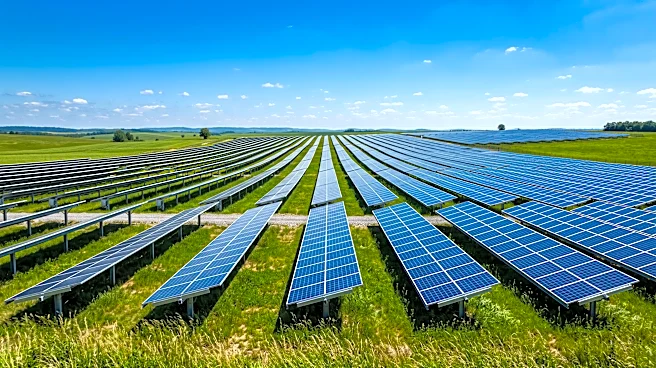
Act, which governs the state's primary solar incentive program, Illinois Shines. Key changes include raising the community solar project size cap to 10 megawatts and restructuring renewable energy credit contracts for public-school distributed-generation projects. The Act also introduces a Solar Bill of Rights, effective June 1, which prevents non-home-rule municipalities from outright banning solar installations, thereby removing a significant legal obstacle to development. Since the law's implementation, Illinois local governments have filed solar RFPs at approximately four times their normal rate, with 35 RFPs in the 30 days leading up to mid-November 2026. This surge is attributed directly to the new law's changes in incentive structure and legal environment, making solar projects more financially viable for local agencies through the Illinois Shines program.
Why It's Important?
The Clean and Reliable Grid Affordability Act is a pivotal piece of legislation for Illinois's renewable energy landscape. By increasing the community solar project size cap and streamlining renewable energy credit contracts, the law makes solar energy more accessible and economically attractive for a wider range of entities, particularly public schools and local governments. The Solar Bill of Rights is crucial as it standardizes solar development regulations across the state, preventing local ordinances from stifling renewable energy growth. This legislative framework provides a stable and predictable environment for solar developers and local agencies, encouraging investment and project initiation. The projected savings of $13.4 billion for consumers over 20 years underscore the significant economic benefits anticipated from this expansion of solar capacity. Furthermore, the law is seen as a strategic move to create a durable state-level commitment to renewable energy, offering stability regardless of potential shifts in federal energy policy.
What's Next?
The immediate next steps involve the translation of the current surge in solar RFPs into actual installed capacity. RFPs filed in October and November 2026 are expected to result in contract award decisions during the first quarter of 2027. The number of awarded contracts and the total capacity they represent will serve as the initial concrete evidence of whether the increased procurement activity successfully leads to new solar installations. Stakeholders, including local governments, solar developers, and the Illinois Power Agency, will be closely monitoring these outcomes. Potential challenges that could impede the translation of RFPs into installed capacity include financing hurdles, site acquisition issues, and utility interconnection processes. The continued implementation of the IPA's 2026 Long-Term Renewable Resources Procurement Plan, which incorporates the CRGA's program changes, will also be critical in providing clear terms for structuring agreements between developers and local agencies.
Beyond the Headlines
The Clean and Reliable Grid Affordability Act represents a broader trend of states taking proactive measures to secure their energy futures and combat climate change, often in anticipation of or in response to federal policy fluctuations. By establishing a robust state-level framework, Illinois is positioning itself as a leader in renewable energy development, fostering economic growth through green jobs and reducing reliance on traditional energy sources. The preemption of local bans on solar installations through the Solar Bill of Rights highlights a significant shift in regulatory power, prioritizing statewide energy goals over localized opposition. This could set a precedent for other states facing similar challenges in expanding renewable energy infrastructure. The law also underscores the increasing role of local governments as key players in the energy transition, driven by both economic incentives and environmental mandates, contributing to a decentralized and more resilient energy grid.