



What's Happening?
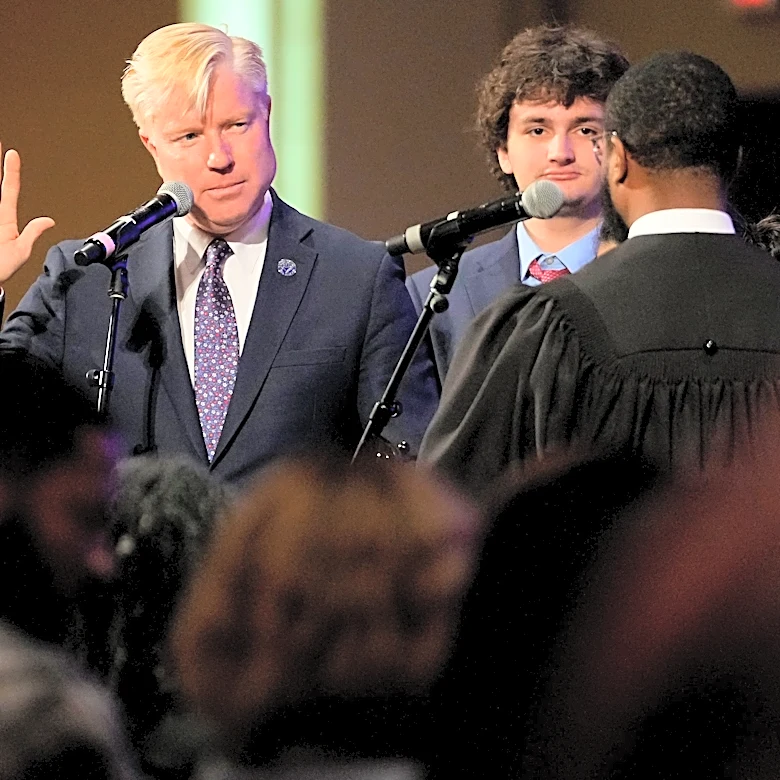
Congresswoman Bonnie Watson Coleman was among several prominent figures, including the Governor and Attorney General, who participated in a gathering focused on public safety and violence prevention in Trenton. The discussions centered on addressing urban
traumatic stress as a root cause of violence, moving beyond simply reacting to violent acts. The event highlighted the need for a comprehensive approach that includes mental health, education, poverty reduction, and support for young people and returning citizens. A key proposal supported by Congresswoman Watson Coleman is the establishment of an Office of Violence Prevention in the City of Trenton. This office would provide permanent infrastructure for violence prevention, complementing initiatives like the Trenton Covenant of Peace Coalition Summit, which aims to address trauma and promote human development as central to breaking cycles of violence.
Why It's Important?
Congresswoman Watson Coleman's advocacy for addressing urban traumatic stress in violence prevention signifies a critical shift in how U.S. communities approach public safety. By focusing on the underlying psychological and social factors contributing to violence, this approach moves beyond traditional law enforcement-centric models. This is important because it acknowledges that violence often stems from deep-seated trauma, fear, and hopelessness, particularly in urban environments. Implementing an Office of Violence Prevention, as supported by Watson Coleman, could lead to more effective, long-term solutions by integrating mental health services, educational programs, and community support systems directly into public safety strategies. This holistic perspective has the potential to reduce crime rates, improve community well-being, and foster a more equitable society by addressing systemic issues rather than just their symptoms. It also highlights the role of federal lawmakers in supporting local initiatives that tackle complex social problems.
What's Next?
The immediate next step is the potential establishment of an Office of Violence Prevention in Trenton, which Congresswoman Watson Coleman strongly supports. This office would aim to create a permanent infrastructure for violence prevention, moving beyond reactive measures. Future efforts will likely involve integrating various stakeholders, including government officials, faith leaders, public safety personnel, mental health professionals, educators, and grassroots organizations, to develop and implement comprehensive strategies. The Trenton Covenant of Peace Coalition Summit, focusing on 'From Trauma to Transformation,' is expected to continue its work in addressing urban traumatic stress and human development. The success of these initiatives will depend on sustained collaboration and funding, as well as a commitment to understanding and transforming the conditions that produce violence rather than just managing its consequences. This approach could serve as a model for other U.S. cities grappling with similar challenges.
Beyond the Headlines
The focus on urban traumatic stress, championed by Congresswoman Watson Coleman, delves into the profound ethical and societal implications of intergenerational trauma and systemic inequalities. It challenges the conventional narrative of individual culpability for violence by highlighting how historical, biological, and environmental factors shape human behavior. This perspective encourages a more compassionate and effective justice system that prioritizes healing and prevention over punishment alone. By advocating for an Office of Violence Prevention and initiatives like the Covenant of Peace, Watson Coleman is promoting a paradigm shift that could redefine public safety as a matter of public health and social justice. This approach acknowledges that true transformation requires addressing the root causes of suffering and creating environments where individuals can thrive, ultimately fostering a more resilient and equitable society. It also raises questions about resource allocation and the need for sustained investment in community-based solutions.