
What's Happening?
The U.S. Department of the Treasury's Office of Foreign Assets Control (OFAC) has intensified its efforts against Iran's illicit oil smuggling operations by sanctioning over two dozen individuals, companies,
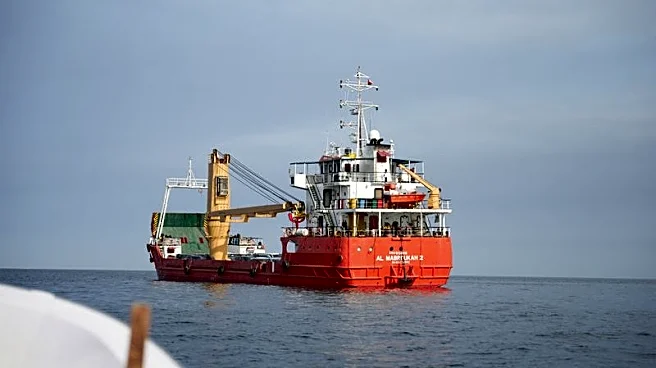
and vessels linked to the network of Iranian oil magnate Mohammad Hossein Shamkhani. This action is part of a broader strategy to disrupt the financial networks supporting Iran's regime and its proxies, such as Hizballah. The sanctions target entities involved in a complex scheme that includes the sale of Iranian oil in exchange for Venezuelan gold, benefiting Iran's Islamic Revolutionary Guard Corps and Hizballah. The network uses front companies to evade sanctions and finance the Iranian regime, with operations spanning multiple countries, including the UAE and India.
Why It's Important?
This move by the U.S. Treasury underscores the ongoing geopolitical tensions surrounding Iran's oil exports and its implications for global trade and security. By targeting the Shamkhani network, the U.S. aims to cut off significant revenue streams that fund Iran's military and terrorist activities. The sanctions could have a ripple effect on international markets, particularly in the oil and shipping industries, as companies and countries reassess their dealings with Iranian entities. Financial institutions worldwide are put on notice to avoid transactions with designated entities, which could lead to broader economic repercussions and increased scrutiny of international trade practices.
What's Next?
The sanctions are expected to further isolate Iran economically, potentially leading to increased diplomatic tensions. The U.S. may continue to expand its sanctions regime, targeting additional entities and individuals involved in similar activities. Companies and countries involved in the global oil trade will likely need to enhance their compliance measures to avoid inadvertent violations. The situation may also prompt responses from Iran and its allies, potentially escalating regional conflicts or prompting diplomatic negotiations.
Beyond the Headlines
The sanctions highlight the ethical and legal challenges of enforcing international trade laws and the complexities of global supply chains. They also raise questions about the effectiveness of sanctions as a tool for achieving foreign policy objectives, particularly in altering the behavior of state actors like Iran. The long-term impact on U.S.-Iran relations and the broader Middle East geopolitical landscape remains uncertain, with potential implications for global energy security and economic stability.