
What's Happening?
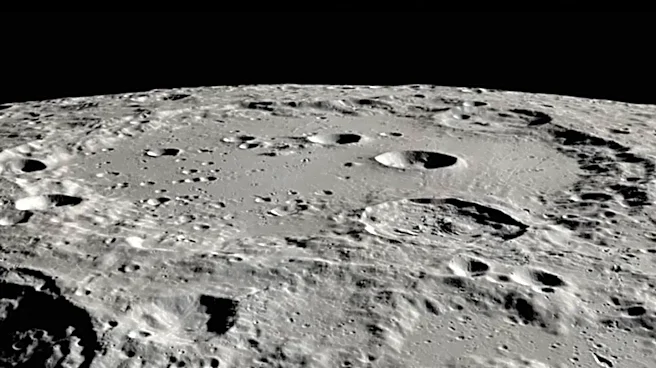
South Korea's first lunar probe, Danuri, has successfully captured images of a crater created by the impact of a SpaceX Falcon 9 upper stage on the moon. The collision occurred on August 5, 2026, when the rocket body, which had been orbiting Earth, was
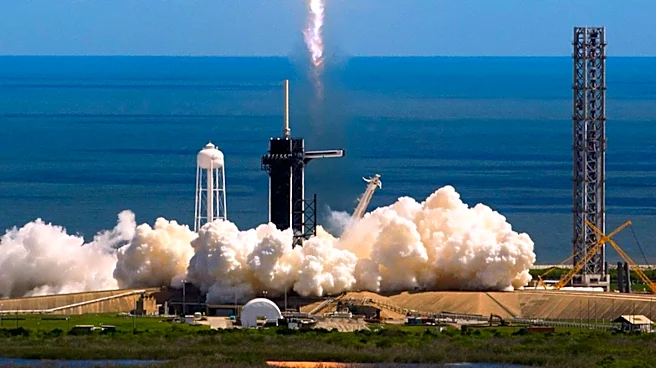
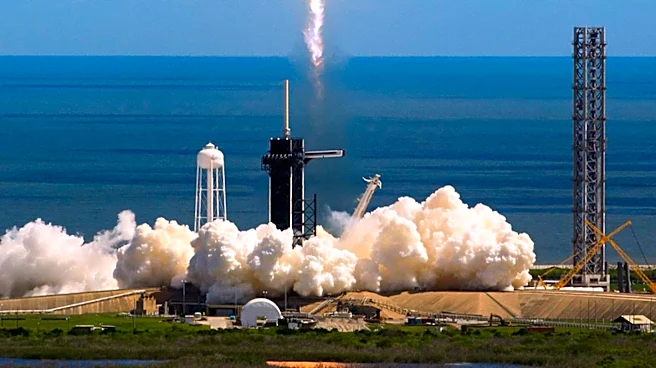
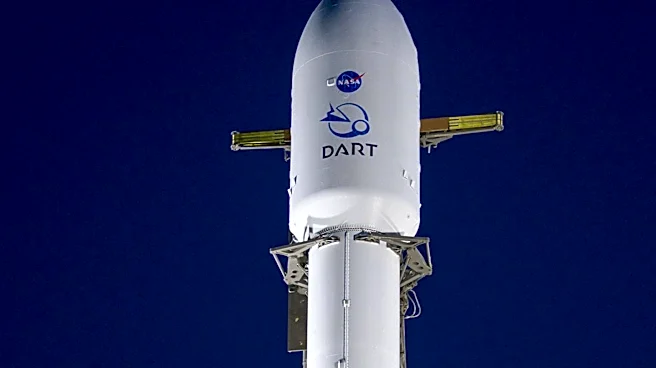
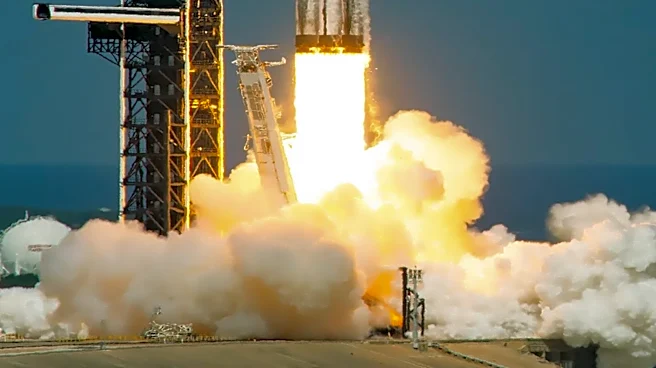
pushed onto a collision course with the moon due to solar activity and gravitational forces. The Korea Aerospace Research Institute (KARI) reported that Danuri began its observations 30 minutes before the impact and conducted multiple imaging sessions to document the changes in the lunar terrain. The Falcon 9 upper stage, which launched on January 15, 2025, was part of a mission to send two private robotic moon landers to a high, moon-crossing Earth orbit. While one lander, Blue Ghost, successfully landed, the other, Resilience, crashed. The impact of the Falcon 9 upper stage is estimated to have created a crater up to 89 feet wide.
Why It's Important?
The successful capture of the impact site by Danuri provides valuable data for lunar research and international collaboration. The observations will be used alongside data from NASA's Lunar Reconnaissance Orbiter to verify predictions about the impact's parameters, such as speed and crater size. This event highlights the growing role of international partnerships in space exploration and the importance of monitoring space debris. The incident also underscores the challenges of managing space missions and the potential risks associated with space debris impacting celestial bodies. The data collected could inform future missions and strategies for debris management, contributing to safer and more efficient space exploration.
What's Next?
Following the initial observations by Danuri, further analysis and research will be conducted in collaboration with NASA and other international partners. The data will be used to refine models of lunar impacts and improve predictions for future missions. Additionally, ground-based telescopes may provide supplementary observations to enhance understanding of the impact. The findings could influence future space mission planning and debris management strategies, potentially leading to new protocols for handling spent rocket stages and other space debris. The collaboration between South Korea and international space agencies may also pave the way for more joint missions and research initiatives.